
Appliance Repair hours: Mon to Sat, 8 am to 7 pm

Appliance Repair from $80

5.0 out of 5.Rated 5.0 on Google

5.0 out of 5.Rated 5.0 on Google

Appliance repair

Dishwasher Repair in St. John’s

Dishwasher repair in St. John’s starts at $80, for a tub that holds water after a cycle, gritty glasses, a dripping door or a dead start button. HomeBrill repairs the dishwasher where it is fitted, whether the kitchen is in a downtown row house or a newer house on the edge of the city.

  • Starting at $80
  • Mon to Sat, 8 am to 7 pm
  • Samsung, LG, Whirlpool, GE and 11 more brands
  • Call or text, no account needed

Book dishwasher repair

No account needed. HomeBrill calls or texts you back to set a time for the visit.

Appliance repair starts at $80. After the technician finds the fault, you get a quote for the repair before the work goes ahead. Privacy: see the privacy policy. This site is protected by reCAPTCHA and the Google Privacy Policy and Terms of Service apply.

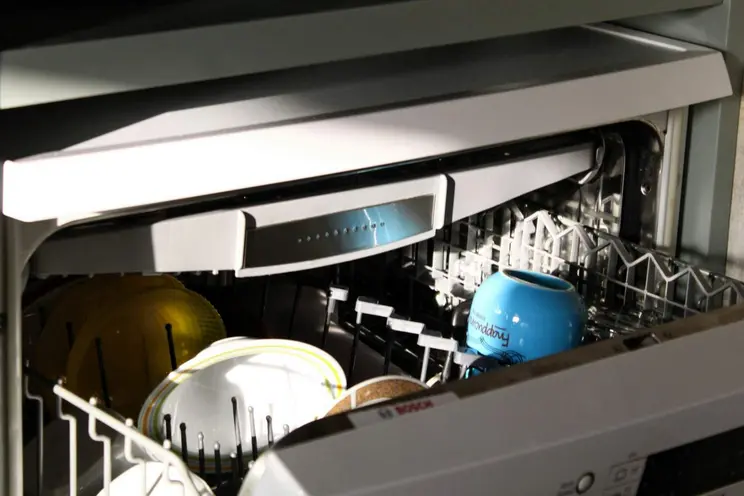
Dishwasher repair in St. John's: a Bosch dishwasher pulled open, with plates and a blue mug in the racks Dishwasher repair in St. John's: a Bosch dishwasher pulled open, with plates and a blue mug in the racks

Booking dishwasher repair in St. John’s

Dishwasher repairs are booked Monday to Saturday, 8:00 am to 7:00 pm. To book, call or text (709) 910-9100, or use the form on this page.

The model number is printed on a label along the edge of the door or the side of the tub, seen with the door open. Send it with the brand and any code on the display. Booking more than one kitchen appliance? Refrigerator repair in St. John’s and stove and oven repair in St. John’s have their own pages. The appliance repair page for St. John’s and area covers the rest.

Common dishwasher problems

  • Dishwasher not draining
  • Dishwasher leaking water
  • Dishwasher not cleaning dishes
  • Dishwasher not starting
  • Loud or unusual noises
  • Door latch and seal problems
  • Heating element failure
  • Control board and sensor issues

What happens on a dishwasher visit

Most dishwasher faults can be traced with the machine still in place. Write down any code before the power goes off, since some machines clear it when they restart. Expect the filter and the sump to be checked, and a short cycle run so the fill, the wash and the drain can each be watched. The kick plate below the door comes off to reach the drain pump, the inlet valve and the hoses. With the power off at the breaker, the latch switch, the element and the float switch are tested for continuity.

A leak or a drain fault sometimes needs the dishwasher slid out from under the counter. Clear the cabinet under the sink, so the supply valve and the drain hose can be reached. Once the failed part is named, you get the quote and decide. A part that has to be ordered means a second visit to fit it.

Why a dishwasher cycle can take hours

A new dishwasher often runs far longer than the one it replaced, and most of the time that is by design. To use less water and energy, many newer machines wash at lower temperatures for longer, letting the detergent soak rather than blasting the dishes hot. Sensor or automatic cycles read how dirty the water is and add time to a heavy load. And many hold the cycle until the water reaches a set temperature, so a cool supply stretches every load.

The manual gives the normal length of each cycle, which is the fairest test. A cycle that runs well past it points to a fault. That is most likely when the remaining time stalls at the same point on every load, the dishes come out cold and wet, or a code appears. Then the heating element, its thermostat or the temperature sensor may have failed, and the control is waiting for a reading that never comes.

Faults and parts

Why dishwashers stop draining or cleaning, and what to check first

HomeBrill fixes built-in dishwashers that hold water, leave food on the plates, drip at the door or will not start. They are booked in St. John’s homes and the five areas around the city.

A dishwasher uses less water than most people expect. It lets in a few litres, heats them, pumps them through the spray arms again and again, drains them, and repeats for the rinse. The filter, the two pumps, the heater and the controls each do a share, and most faults trace back to one of them.

Before you book, start with the filter. Many newer machines have no grinder and trap food in a filter at the bottom of the tub that the owner is meant to rinse. Take it out, rinse it, and look into the sump beneath it. Spin each spray arm by hand to see that it turns freely. Check that the control lock is off and the door latches firmly. Under the sink, make sure the supply valve is open and the drain hose is not kinked or crushed by stored bottles. If the dishwasher leaked, turn off its breaker before you touch anything, since many are wired in rather than plugged in, and close the supply valve. Appliance repair hours start at 8:00 am, Monday to Saturday, so a leak found overnight can be reported first thing.

What it is doing, and the usual causes

Water standing in the bottom
A filter packed with food, or glass or a pit lodged in the drain pump. A crushed or kinked drain hose, a blocked garbage disposer inlet or a failed drain pump does the same.
Dishes come out dirty or gritty
A dirty filter, spray arm holes plugged with debris, cool water at the start of the cycle, a weak wash pump or motor, old detergent, or a crowded rack.
Plastics and cups stay wet
An empty rinse aid dispenser, a condensation-dry design that is normal on many European-style machines, or a failed heating element on models that use one.
Leaking onto the floor
A worn door gasket, hand-dish soap foaming out of the door, a failed pump seal, a loose hose connection, a cracked tub, or a machine tilted toward the door.
Will not start, or stops partway
The door latch switch, the control lock left on, a blown thermal fuse, a control board fault, or a float switch tripped by water in the base.
Will not fill
The supply valve under the sink closed, a failed water inlet valve, or a float switch stuck up.
Grinding or humming
Glass, a fruit pit or a bone in the wash pump or chopper, worn pump bearings, or a spray arm striking a tall item.
Smells, even after a wash
Food rotting in the filter or the sump, or a drain hose without its high loop, so dirty sink water flows back in.

Parts a dishwasher repair often involves

  • Filter assembly Catches food before it reaches the pumps; many newer machines have one the owner rinses by hand.
  • Drain pump Empties the tub after each wash and rinse.
  • Wash pump and motor Drive water through the spray arms.
  • Water inlet valve The electric valve on the hot line that lets water in.
  • Float switch and leak base Shut the machine down when water collects under the tub.
  • Door latch and switch Hold the door shut and tell the control it is closed.
  • Door gasket The rubber seal around the tub opening.
  • Heating element Heats the wash water, and on some models dries the load.

Pricing

What dishwasher repair costs

Dishwasher repair with HomeBrill starts at $80. The technician runs the machine, tests its parts and names the one at fault, then quotes the repair, and you decide before any of it begins.

The part sets most of the price. A door latch, an inlet valve, a float switch, a gasket or a drain pump is a routine repair. A wash motor or a control board is a bigger one. Some repairs need the dishwasher out from under the counter, which takes longer when new flooring was laid around it or the counter above was lowered. If a part has to be ordered for the model, a second visit fits it.

A cracked tub, or a failed wash motor on an inexpensive machine, usually points to a new dishwasher rather than a repair. The working lives commonly quoted for dishwashers are shorter than for fridges or ranges, so age weighs more in that decision.

Appliance repair starts at
$80
The repair
Quoted once the technician finds the fault, before the work goes ahead

Brands

Dishwasher brands HomeBrill repairs

Whirlpool, KitchenAid, Maytag and Amana come from Whirlpool Corporation, and Frigidaire from Electrolux, so many of their pumps, valves and latches are shared. Kenmore dishwashers come from other makers, and the first three digits of the model number name which one.

Bosch and Miele build European-style machines that dry by condensation rather than with an exposed element, so plastics come out damp by design. Bosch machines have a leak sensor in the base pan that stops the machine and shows E15 when it finds water.

Samsung and LG dishwashers name their faults on the display. On many Samsung models an LC code means water in the base, and a 5C or 5E code a drain that will not empty. On many LG models OE is the drain fault and IE a fill that takes too long. GE and Frigidaire machines often flash their lights in a pattern instead, and the chart for it is usually printed inside the door or in the manual. A code points to the part to test first, not straight to the part to buy.

  • Samsung
  • LG
  • Whirlpool
  • GE
  • Frigidaire
  • Maytag
  • Bosch
  • Amana
  • KitchenAid
  • Electrolux
  • Kenmore
  • Miele
  • Panasonic
  • Danby
  • Sharp

dishwasher repair

The drain hose and the cabinet under the sink

On its way from the pump to the drain, the hose needs to climb close to the underside of the counter in a high loop. The other way is an air gap at the sink. Without that rise, dirty sink water can siphon back into the tub, and the machine smells even when it is clean. Which of the two is required depends on local plumbing rules.

A slow leak under a built-in dishwasher can rot the subfloor long before water shows on the kitchen floor. A leak tray or water sensor under the machine is inexpensive, and a damp patch at the toe kick deserves a look.

Repair or replace an older dishwasher

Most dishwasher faults are small parts on a tub with years left in it. A latch, a gasket, an inlet valve, a float switch or a drain pump is worth fixing on almost any machine whose tub and racks are sound. The decision gets harder when the expensive parts fail. A wash motor or a control board on an inexpensive machine can cost a large share of a new one. Rust that has eaten through the frame under the tub usually settles it, since the machine can no longer be levelled and sealed.

Three things help you weigh the quote. Look at the racks and the tub: rust on the tines and a stained, pitted tub mean a tired machine. Ask whether the part is still made for that model. And think about noise and water use, because a replacement may run quieter and use less water than a machine of an older design.

Reviews

The HomeBrill rating on Google

5.0 out of 5.Rated 5.0 on Google

HomeBrill reviews and rating

Dishwashers across St. John’s and the areas around it

The city’s homes span 19th and early 20th century wooden row houses downtown, post-war suburbs, and recent subdivisions on the west and north edges. In older houses, largely attached wooden row houses downtown and older attached and row houses in Georgestown, the kitchen was planned before dishwashers were common. The machine came later, sometimes on a shared circuit or with a long, improvised drain run, so both are worth a look when it trips a breaker or drains slowly. In an older neighbourhood of small, closely spaced houses such as Rabbittown, a kitchen may only have room for a narrow dishwasher, which takes its own parts.

Each area’s page takes its own case. In a house with a finished basement, dishwasher repair in Mount Pearl traces a hidden leak to its stain on the ceiling below. In Kenmount Terrace, one of the city’s newer subdivisions, kitchens bring manual filters, codes and condensation drying, which dishwasher repair in Paradise explains. Dishwasher repair in the Goulds covers a kitchen that does a lot of canning. A sink on an outside wall can freeze its supply line in a hard frost, the subject of dishwasher repair in Torbay. Dishwasher repair in CBS explains what to do between a leak and the visit.

FAQ

Dishwasher questions from St. John’s

Why has the spray arm in my dishwasher stopped turning?

Look first for a tall pan or utensil in its path, holes packed with seeds, glass or label paper, or a filter so blocked that little water reaches the arm. Lift the arm off, rinse it, clear the holes and spin it by hand to check that it turns freely on its hub. If it is clean and free but still barely moves during a wash, the wash pump is not pushing enough water, and the pump or its motor needs testing.

My dishwasher fills, then hums without washing. What has failed?

Water is coming in but the spray never starts, so the wash pump is not turning. Something hard caught in it, a piece of glass or a fruit pit, can jam its impeller. On a machine left unused for weeks, a pump seal can dry out and stick. Otherwise the wash motor itself has failed, or the part on the control that switches it on. Turn the dishwasher off rather than leaving it to hum, since a stalled motor heats up.

What is the small dome in the bottom of my dishwasher tub?

On many models it is the float. It rides up as the water rises and, at its limit, trips a switch that stops the fill. A float held down by grease or glass can let the machine overfill and leak, and one stuck up can stop it filling at all. Check that it lifts and drops freely by hand and clean around it. If it moves freely and the fault remains, the switch under it may have failed.

Can I replace a torn dishwasher door gasket myself?

Often, yes. On many models the gasket presses into a channel around the tub opening and pulls out by hand once the machine is switched off. Fit one matched to the model number, and soak the new one in hot water first to make it easier to seat. If the drip is at the bottom of the door, look also at the separate strip along the lower edge, which wears on its own and is a different part.

Why is there standing water in the bottom of my dishwasher?

The water is not getting out, and a packed filter is the usual reason. Rinse it and check the sump below it for broken glass, then look under the sink for a drain hose bent flat. A pump that hums and moves no water has failed or is jammed.

Why are my dishes still dirty after the dishwasher runs?

Suspect a blocked filter or spray arm first: hold each arm up to the light and clear plugged holes with a toothpick. A long hot line can start the wash with cold water, so run the kitchen tap hot before a load. Old detergent and crowded racks leave food behind too. If all of that is fine, the wash pump may be weak.

Why won’t my dishwasher start even though the lights come on?

Lights mean it has power, so look at what stops it running. Many models have a control lock, often a key or padlock symbol that a long press turns on and off. The door latch may not be catching, or its switch may have failed. A machine with water in its base will not start either, because the float switch keeps it off until the leak is found.

How do I clean a dishwasher filter?

Most lift out of the floor of the tub after a quarter turn; the manual shows yours. Rinse it under the tap and scrub the mesh gently with a soft brush, never a wire one, then lock it back in place. A filter left out or not locked lets food reach the pumps.

Book dishwasher repair in St. John’s

Call, text or send the form, Mon to Sat, 8:00 am to 7:00 pm.