
Appliance Repair hours: Mon to Sat, 8 am to 7 pm

Appliance Repair from $80

5.0 out of 5.Rated 5.0 on Google

5.0 out of 5.Rated 5.0 on Google

Appliance repair

Dryer Repair in St. John’s

Dryer repair in St. John’s starts at $80, in a city where the dryer does most of the drying. HomeBrill repairs dryers that blow cold, take two cycles, squeal, or hum without turning the drum, and the repair is quoted once the fault is found.

  • Starting at $80
  • Mon to Sat, 8 am to 7 pm
  • Samsung, LG, Whirlpool, GE and 11 more brands
  • Call or text, no account needed

Book dryer repair

No account needed. HomeBrill calls or texts you back to set a time for the visit.

Appliance repair starts at $80. After the technician finds the fault, you get a quote for the repair before the work goes ahead. Privacy: see the privacy policy. This site is protected by reCAPTCHA and the Google Privacy Policy and Terms of Service apply.

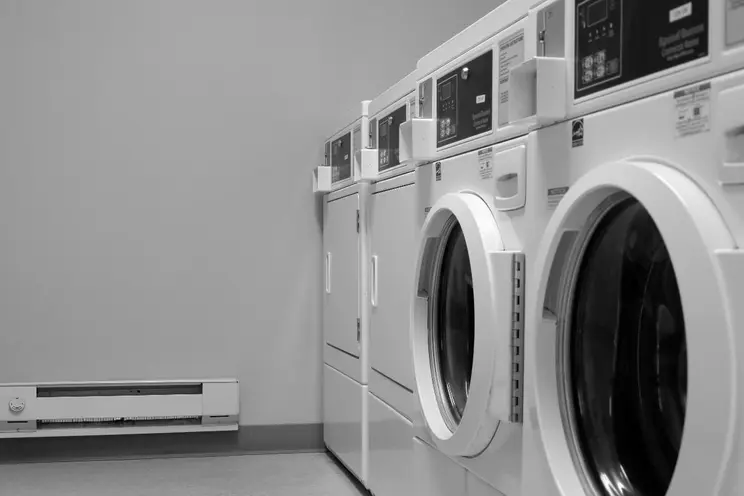
Dryer repair in St. John's: a row of white front-load dryers and washers along a laundry room wall, in black and white Dryer repair in St. John's: a row of white front-load dryers and washers along a laundry room wall, in black and white

Booking a dryer repair in St. John’s

Dryer visits run Monday through Saturday, between 8:00 am and 7:00 pm. To book one, text or call (709) 910-9100, or use the form above.

Two details make the booking useful. First, the model number, printed on a label inside the door opening on most dryers, or on the back panel. Second, where the dryer sits: on its own, stacked, in a closet or down basement stairs. Say too whether it is electric or propane, since the heat comes from different parts. If the dryer stopped with a burning smell, unplug it, leave the cabinet closed and mention the smell, so the lint around the heater is checked first. Washer faults are on the page for washer repair in St. John’s.

Common dryer problems

  • Dryer not heating properly
  • Dryer not spinning
  • Clothes taking too long to dry
  • Burning smells or overheating
  • Unusual noises or vibrations
  • Dryer not starting at all
  • Blocked or damaged vent systems

What happens on a dryer visit

The visit follows the symptom you gave. A dryer that will not heat or dries slowly is usually run and checked at the outside hood first, because a blocked vent explains both faults. Then, with the dryer unplugged, the heat parts are tested one by one with a multimeter: the thermal fuse, the high-limit and cycling thermostats, and the element. On a propane dryer the igniter, flame sensor and valve coils are tested instead, and nothing on the gas line is opened. A dryer that hums without turning has its front or top panel taken off so the belt, idler pulley and motor can be seen. Lint found inside the cabinet is worth clearing before the panels go back.

With the failed part found, you get the quote, and the repair goes ahead only if you agree. If the part has to be ordered, a second visit fits it. Afterwards, ask for a full heat cycle to be run, so you can feel the heat at the hood before the technician leaves.

Fog, wet days and the St. John’s dryer

St. John’s is commonly cited as one of the foggiest, windiest and wettest major cities in Canada. A clothesline cannot be counted on in that weather, which can leave the dryer handling most loads, year round. More cycles mean more wear on the parts that turn: rollers flatten, the idler pulley starts to squeal, the belt stretches. More loads also mean more lint, so a skipped screen matters more here than in a drier climate. A load also comes out of the washer wetter after a low spin. Choose the highest spin speed the fabric allows before deciding the dryer is at fault.

The weather works on the outside of the house too, and a vent hood on a wall facing the wind gets the worst of it. On exposed ground such as Shea Heights, on the high ground of the Southside Hills, snow can bury a low hood and ice can freeze its flap shut. Clear both after a storm before the next load.

Inside, the vent run depends on the house. Downtown, most houses are attached wooden row houses on steep streets that climb from the harbour, and an attached house can only vent through its front or back wall. In an older home with the laundry in the basement, the duct may travel several metres and turn two or three corners before it reaches an outside wall. In Kenmount Terrace, one of the city’s newer subdivisions, the laundry may be upstairs. There the duct may climb through a wall or out through the roof, where lint is harder to reach.

Faults and parts

Why dryers stop drying, and what to check first

HomeBrill fixes dryers that run cold, need two cycles to dry a load, squeal, or stop turning. The vent behind the machine plays a part in more of those faults than most people expect.

A dryer does three things: it makes heat, it moves air through the drum and out of the house, and it turns the load. Nearly every dryer fault is a failure of one of the three, and the symptom usually says which. Cold air means a heat fault. Warm air and wet clothes mean an airflow fault. A drum that will not turn is the belt, the pulley or the motor.

Before you book, four checks cost nothing. Clean the lint screen and look into the slot it sits in, where lint packs in below it. Go outside and look at the vent hood while the dryer runs: a flapper that sticks shut, or lint packed behind it, stops the air. Check the breaker panel, because an electric dryer is fed by a double breaker and one tripped half leaves the drum turning with no heat. And check that the cycle is not set to air fluff, which runs with no heat on purpose.

What it is doing, and the usual causes

Runs but stays cold (electric)
A blown thermal fuse, often after a blocked vent; an open heating element; a failed thermostat; or one half of a double breaker tripped.
Runs but stays cold (propane)
A weak igniter, a failed flame sensor or worn gas valve coils, or simply an empty tank or a closed valve. Whatever opens the gas line is for a qualified gas technician to do.
Needs two cycles to dry a load
A lint-packed or crushed vent, a blocked outside hood, dirty moisture sensor bars, or a drum filled past what it can tumble.
Will not start
The door switch, the thermal fuse on models where it also cuts the motor, the start switch, the drive motor or the control board.
Motor hums but the drum stays still
A broken drum belt, a seized idler pulley or a failed motor.
Squeals, thumps or grinds
A worn idler pulley or dry drum rollers, often a squeal at start-up that fades as the dryer warms. A flat spot worn into a roller is heard as a rhythmic thump. Worn glides, felt seals or a rear drum bearing grind. None of them gets better on its own.
Stops partway through a cycle
Overheating from a restricted vent, a motor overload, a failing thermostat, or a timer or control fault.
Smells of burning
Lint inside the cabinet or around the heater, or a motor running hot. Stop the dryer and unplug it until it is checked.

Parts a dryer repair often involves

  • Thermal fuse A one-time safety fuse that blows when the dryer overheats.
  • Heating element The coil that makes the heat in an electric dryer.
  • High-limit and cycling thermostats Switch the heat off at set temperatures.
  • Igniter, flame sensor and gas valve coils Light and hold the burner flame in a propane dryer.
  • Drum belt and idler pulley Turn the drum from the motor and keep the belt tight.
  • Drum rollers and glides Carry the weight of the drum as it turns.
  • Moisture sensor bars Metal strips inside the drum that end an auto-dry cycle.
  • Door switch Tells the dryer the door is shut, so it will run.
  • Vent duct and outside hood Carry the hot, damp air out of the house.

Pricing

What dryer repair costs

Appliance repair with HomeBrill starts at $80, and dryer repair is no exception. Once the cause is traced, the technician tells you what putting it right will cost, and nothing is started until you agree.

On a dryer, the quote mostly follows the part. A thermal fuse, a door switch, a belt or an idler pulley is a small part, and replacing one is routine. A drive motor or a control board costs more. Access matters when the dryer is stacked on a washer in a closet, or built into a laundry nook with no room to pull it out. And a fuse on its own is not a repair if the vent behind it is still blocked. The new fuse will blow for the same reason the old one did, so the vent is part of the job.

Appliance repair starts at
$80
The repair
Quoted once the technician finds the fault, before the work goes ahead

Brands

Dryer brands HomeBrill repairs

Of the fifteen brands we repair, the dryer makers are Samsung, LG, Whirlpool, GE, Frigidaire, Maytag, Bosch, Amana, KitchenAid, Electrolux, Kenmore and Miele. Many Whirlpool-built dryers, sold as Whirlpool, Maytag, Kenmore and Amana, share the same drive and heating parts, which keeps those parts easy to find.

Samsung and LG dryers show codes for heating and airflow faults. On many LG models a code from d80 to d95 is the Flow Sense warning that the vent is partly blocked, and the number rises as the blockage grows. On many Samsung dryers an HE code points to the heating circuit. Check a code against the manual for that model, because the same code can mean different things on different machines.

Electric dryers made by Whirlpool, and sold as Whirlpool, Maytag, Kenmore and Amana, usually carry the thermal fuse on the blower housing at the back. A GE or Frigidaire dryer puts its safety parts in other places, so the model number decides where the technician looks first. Bosch and Miele sell compact and heat-pump models, whose condensers and fluff filters need regular cleaning of their own.

Compact 24-inch dryers and washer-dryer stacks fit small laundry closets. Ventless dryers, condenser and heat-pump types, need no outside vent but do need their lint filters and condensers kept clean.

  • Samsung
  • LG
  • Whirlpool
  • GE
  • Frigidaire
  • Maytag
  • Bosch
  • Amana
  • KitchenAid
  • Electrolux
  • Kenmore
  • Miele
  • Panasonic
  • Danby
  • Sharp

dryer repair

The vent: where many dryer faults begin

Many heat and drying-time faults trace back to the vent run rather than the dryer. A dryer that cannot push its air out runs hotter until a thermal fuse or thermostat shuts it down.

A good vent is metal duct, rigid or the semi-rigid kind, taken outdoors by the shortest and straightest path the room has. Plastic and thin foil accordion duct crush behind the dryer and trap lint in their folds. Makers also set a longest run for the vent, shortened for every elbow, and the installation manual gives the figures for that model. Newfoundland and Labrador has no natural gas distribution system, so a gas dryer in a St. John’s home runs on propane. A dryer must never vent into the house, and a propane dryer least of all, because its exhaust carries combustion gases.

Repair or replace an old dryer

A dryer is mostly a drum, a motor, a belt and a heater, built simply compared with a washer or a fridge. The parts that wear, belts, rollers, pulleys, fuses, thermostats, elements and igniters, are routine on almost every model, which is why an old dryer can often be kept going.

The signs that one has reached its end are physical. A drum or cabinet has rusted through, a motor and a control board fail together on an inexpensive machine, or the parts are no longer made. And when a dryer has overheated more than once, check the vent before deciding, because a new dryer on the same blocked vent will overheat in the same way.

Reviews

The HomeBrill rating on Google

5.0 out of 5.Rated 5.0 on Google

HomeBrill reviews and rating

Dryer repair in the five areas around St. John’s

Dryers are booked the same way in all six areas, and each area’s page takes the vent case it meets most. In a house where the dryer sits in the basement, the duct may run several metres above a finished ceiling, the case dryer repair in Mount Pearl takes up. Where the housing is recent, dryer repair in Paradise looks for a vent hidden in a wall or a ceiling. On the shore of Conception Bay, dryer repair in CBS checks a hood that takes the salt air. The Goulds is more rural than central St. John’s, with larger lots and open land in parts. A duct there may cross a cold garage or crawl space and gather condensation, as dryer repair in the Goulds explains. On the Atlantic coast, dryer repair in Torbay deals with a flap that wind and snow hold shut. The appliance repair page for St. John’s and area covers the other appliances.

FAQ

Questions about dryers in St. John’s homes

Why does my dryer trip its breaker?

A breaker that trips the moment the heat comes on often points to a heating element that has broken and touched the cabinet. A burnt terminal block, where the cord connects, does the same. One that trips at random can be a worn breaker, or a dryer sharing a circuit it should have to itself. Leave it off rather than resetting it again and again; if the dryer tests sound, the breaker and the wiring are a job for an electrician.

My dryer hums but the drum will not turn. What has failed?

Usually the drum belt has snapped or the idler pulley that tensions it has seized. Less often the drive motor itself has failed. Switch the dryer off rather than letting it hum, because a stalled motor overheats.

Can lint build up inside the dryer, not just in the vent?

It can. Lint that slips past a torn or missing screen collects around the motor and the heater housing, where it can scorch. A burning smell during a cycle is the usual sign: stop the dryer, unplug it, and leave the cabinet closed for a technician to open and clean.

Why does my dryer stop partway through a cycle and then start again?

That pattern usually means it is overheating, and a thermostat or the motor’s own overload switch cuts out until things cool down. Restricted airflow is the commonest cause, so check the lint screen, the duct behind the dryer and the outside hood. If the air path is clear, a failing thermostat, motor or timer is next.

Why is my dryer running but not heating?

On an electric dryer, suspect a blown thermal fuse, a failed element or thermostat, or one tripped half of its double breaker. On a propane dryer, check the tank and its valve first, then the parts that light the burner: the igniter, the flame sensor and the gas valve coils. The gas valve itself, and anything else on the gas line, is work for a qualified gas technician. A fuse that blew because the vent was blocked will blow again unless the vent is cleared too.

Is a blocked dryer vent a fire risk?

Yes. Lint burns easily, and lint left to build up in a dryer or its vent can catch fire. Empty the lint screen every load, keep the duct short and made of metal, and have the full vent run checked and cleaned regularly.

Why are my clothes still damp after an auto-dry cycle?

Auto-dry ends when the moisture sensor bars inside the drum read the clothes as dry. Fabric softener leaves a film on those bars that fools them, so wipe them with a little rubbing alcohol. If that does not help, the vent may be restricted or the drum may be too full to tumble the load.

Can a gas dryer run on propane?

Yes, with the manufacturer’s propane conversion kit, fitted by a qualified gas technician. Every gas dryer here runs on propane. If you smell gas near a dryer, do not switch anything on or off: leave the house and call 911 or your propane supplier from outside.

Book dryer repair in St. John’s

Call, text or send the form, Mon to Sat, 8:00 am to 7:00 pm.