
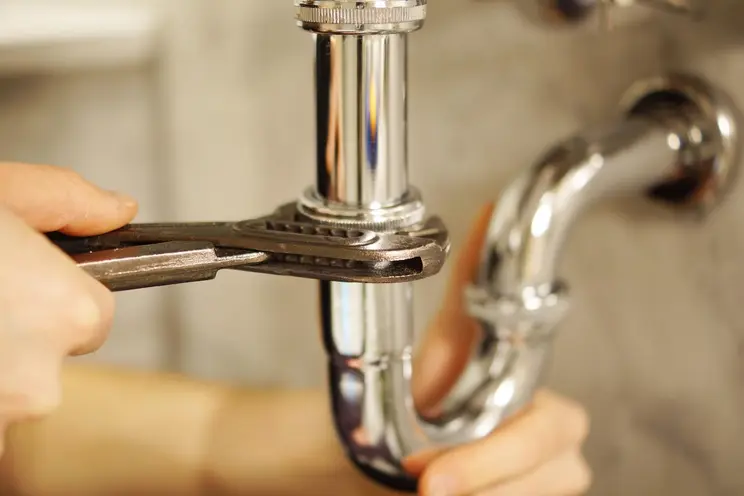
Most plumbing calls start with something you can see or hear. It may be a drip that keeps you awake, a sink that empties slowly, a stain spreading across a ceiling, a toilet that hisses between flushes. Describe that, and say where in the house it is, and the job can be planned.
We take on ten plumbing jobs, and nine have a page of their own. For water that will not drain or will not stay in the pipe, there is drain cleaning and unclogging, leak detection and repair and pipe repair and replacement. For fixtures, there is faucet and sink installation, plumbing fixture upgrades, shower and bathtub repair and toilet repair and installation. Two more cover emergency plumbing services and water pressure troubleshooting. The tenth, kitchen and bathroom plumbing, is covered here.
Kitchen and bathroom plumbing
Most of the plumbing in a house sits in two rooms. In the kitchen it is the sink, its faucet and drain, the stop valves under the basin and the water line and drain hose of a dishwasher. In the bathroom it is the toilet, the basin, the tub and the shower. One visit can take in several fixtures, so mention each one. Connecting a dishwasher’s water and drain is plumbing; a dishwasher that will not run or heat is dishwasher repair.
Plumbing for homes
The ten plumbing jobs on our list are the plumbing of a home: a house, a flat or a basement apartment. Plumbing for a shop, an office or a building shared by a business and homes is not among them, and commercial plumbing in St. John’s explains what to ask. Installing a sump pump is not one of the ten jobs either, so describe the basement and ask whether HomeBrill can take it on.
What sits behind the walls follows the age of the house. Housing in the city runs from 19th and early 20th century wooden row houses downtown through post-war suburbs to recent subdivisions on the west and north edges. Much of downtown was rebuilt after the Great Fire of 1892, so a downtown house can be well over a century old. Older houses may still carry galvanized steel supply pipe that rusts from the inside and cast-iron drains. A house built or replumbed between about the late 1970s and the mid 1990s may have grey polybutylene supply lines, known for failing at their fittings. Newer homes use PEX or copper for water and black ABS plastic for drains. Knowing roughly when your house was built, and whether it has been replumbed, tells the plumber a good deal before the first wall is touched.


