
Appliance Repair hours: Mon to Sat, 8 am to 7 pm

Appliance Repair from $80

5.0 out of 5.Rated 5.0 on Google

5.0 out of 5.Rated 5.0 on Google

Appliance repair

Washer Repair in St. John’s, NL

Washer repair in St. John’s starts at $80, for front-load and top-load machines that will not drain, will not spin, leak or walk across the floor. A HomeBrill technician repairs the washer where it stands, whether that is a basement corner, a kitchen nook or an upstairs laundry room.

  • Starting at $80
  • Mon to Sat, 8 am to 7 pm
  • Samsung, LG, Whirlpool, GE and 11 more brands
  • Call or text, no account needed

Book washing machine repair

No account needed. HomeBrill calls or texts you back to set a time for the visit.

Appliance repair starts at $80. After the technician finds the fault, you get a quote for the repair before the work goes ahead. Privacy: see the privacy policy. This site is protected by reCAPTCHA and the Google Privacy Policy and Terms of Service apply.

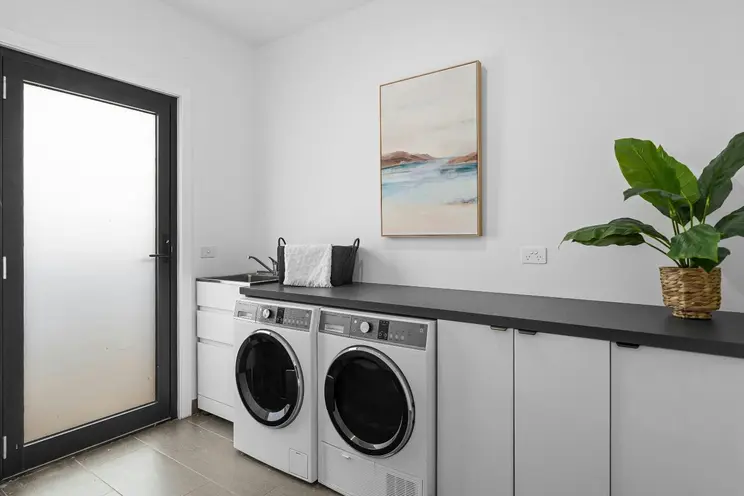
Washer repair in St. John's: a front-load washer and dryer side by side under a dark counter in a white laundry room Washer repair in St. John's: a front-load washer and dryer side by side under a dark counter in a white laundry room

Booking washer repair in St. John’s

A washer visit can be booked for any day but Sunday, from 8:00 am to 7:00 pm. Phone or text (709) 910-9100 with the details, or send the booking form on this page.

Note whether the washer loads from the front or the top, and find its model number. It is under the lid or on the back of a top-loader, and around the door opening or on the back panel of a front-loader. Write down any code on the display, or text a photo of it. Until the visit, close both taps behind the machine and unplug it. If your dryer is misbehaving too, see dryer repair in St. John’s. The appliance repair page for St. John’s and area has the rest of the house.

Common washer problems

  • Washer won’t start or respond
  • Leaking water
  • Unusual noises during operation
  • Washer won’t spin or drain properly
  • Soap residue buildup

What happens on a washer visit

A washer that still holds water is drained first, through the pump filter or the drain hose, so the drum can be turned by hand and the pump reached. The technician then runs a short cycle to see which step fails: the fill, the wash, the drain or the spin. A front-loader’s door boot and the hoses behind the machine are checked for leaks, and the control’s own test mode, which many newer washers have, reads back the stored codes. Have towels and a shallow pan ready.

Once the failed part is found, you get the quote and decide. A part made for the model may have to be ordered and fitted on a second visit.

Hoses, leaks and where the washer sits

Rubber fill hoses weaken with age and can burst under full water pressure. A bulge or a crack near either end is a hose to change now. Look at both hoses once a year with the washer pulled out, and fit braided steel ones when they are replaced.

How much a leak costs you depends on the floor it happens on. Houses in St. John’s range from 19th and early 20th century wooden row houses downtown to post-war suburbs and recent subdivisions on the city’s west and north edges. In a house where the laundry is in the basement, often near a floor drain, a leak meets concrete. In a house where it is on the main or bedroom floor, a split hose soaks the ceiling below. Washer repair in Paradise covers the upstairs washer, and washer repair in Mount Pearl the basement one, with its standpipe and laundry tub. Cold does damage of its own, and washer repair in Torbay covers a washer kept in an unheated porch and a door left locked by a power cut. Washer repair in CBS explains what a washer’s noises mean. The Goulds is more rural than central St. John’s, with open land in parts. Where work or garden clothes go in the wash, washer repair in the Goulds explains what their grit does to a pump filter.

The taps behind a St. John’s washer

The plumbing behind a washer is as old as the house, and in St. John’s that can mean very old. Think of the attached wooden row houses downtown, or Georgestown, whose streets are mostly lined with older attached and row houses. In an older home like those, the two taps that feed the machine may not have been turned in years. Valves like that can seize, or start to weep at the stem the first time someone closes them. That is a poor thing to find out while a hose is spraying.

So find the taps now, and turn each one off and on again while nothing is wrong. A tap that is stiff or drips is a plumbing repair to arrange before it is needed. Some laundry rooms have a single lever that shuts both lines at once. A washer box set into the wall usually hides the taps and the drain behind one small door.

In a basement laundry, look at the floor drain too. One that never gets water dries out, its trap stops sealing, and a sewer smell drifts up that is easy to blame on the washer. A jug of water poured down it now and then cures that.

Faults and parts

Why washers stop draining, spinning or filling, and what to check first

HomeBrill repairs front-load and top-load washing machines. They are for a washer that leaves water in the drum, finishes with clothes still soaking, leaves a puddle, or bangs across the floor on the spin.

A washer fills, washes, drains and spins, and each step waits for the one before it. That is why so many washers that will not spin turn out to have a drain fault: a machine that cannot pump the water out will not start the spin.

Before you book, a few checks are free. Open and clear the pump filter on a front-loader. Pull the machine out far enough to see that no hose is kinked and both taps are fully open. Make sure the child lock is off. If the display shows a code, look it up in the manual for your model, because one brand’s code can mean something else on another. For a load that will not spin, take out the one heavy item, spread the rest around the drum and run a spin on its own. Unplug the washer and close the taps before going further: a drum full of water is heavy, and a full machine pulled out can tip.

If the checks change nothing, note what you tried when you book, since it already rules something out.

What it is doing, and the usual causes

Will not drain, water left in the drum
A clogged pump filter behind the small door at the bottom front of most front-loaders, or a sock or coin in the pump. A kinked drain hose, a blocked standpipe or a failed drain pump.
Will not spin, clothes come out soaking
A drain fault, or an unbalanced or single bulky load. A lid switch or door lock that does not confirm closed, a broken belt, a worn motor coupler, or a motor control fault.
Will not fill, or fills slowly
Taps closed or half closed, clogged screens where the hoses connect, a failed water inlet valve, or a supply frozen in an unheated room.
Leaking
A split fill hose or a perished washer at its end, a torn front-loader door boot, or suds pushed out by too much detergent. A pump or drain hose that drips, a worn tub seal, or an overflowing standpipe.
Roars or rumbles on the spin
Worn drum bearings, or something caught between the drum and the outer tub.
Bangs, shakes or walks
A washer that is not level, shipping bolts left in after delivery, worn shock absorbers or suspension rods, or a lopsided load.
Dead, will not start
No power at the outlet, a door or lid lock fault, the child lock switched on, or a control or interface board fault.
Musty smell, black spots on the door seal
Water left standing in a front-loader’s door boot, too much or non-HE detergent, or the door kept shut between loads.

Parts a washing machine repair often involves

  • Drain pump and pump filter Empty the tub; the filter catches coins, hair ties and socks first.
  • Water inlet valve Where the fill hoses connect; its small screens catch sediment.
  • Lid switch, lid lock or door lock The washer will not spin until it knows the lid or door is shut.
  • Door boot gasket The rubber bellows that seals a front-loader’s door.
  • Belt, motor coupler and transmission Carry the motor’s power to the drum on belt-drive and older direct-drive machines.
  • Direct-drive motor A rotor and stator fixed straight to the drum shaft on many newer washers.
  • Shock absorbers and suspension rods Hold the tub steady through the spin.
  • Drum bearings and seal Let the drum turn; on many front-loaders they are pressed into the outer tub.
  • Drum spider The metal bracket on the back of a front-loader’s drum.

Pricing

What washing machine repair costs

A washing machine repair with HomeBrill starts at $80. The technician diagnoses the washer, tells you what has failed and what fixing it will cost, and goes ahead only when you agree.

Most of that price is the part. A clogged pump filter, a drain pump, an inlet valve, a lid switch, a door lock, a belt or a coupler is a common repair. A motor, a control board or a set of drum bearings is a bigger one. Access adds time when the washer is stacked under a dryer in a closet or wedged into a nook upstairs. When the part has to come in for your model, fitting it takes another trip.

Appliance repair starts at
$80
The repair
Quoted once the technician finds the fault, before the work goes ahead

Brands

Washing machine brands HomeBrill repairs

We work on Whirlpool, Maytag, KitchenAid and Amana washers, all from Whirlpool Corporation, as well as GE, Frigidaire, Electrolux, Samsung, LG, Bosch, Miele and Kenmore. Older Whirlpool-built direct-drive top-loaders, sold under several names including Kenmore, are known for a plastic motor coupler that wears out, a small part to replace.

LG and Samsung use direct-drive motors on many models, and their codes are widely published. On LG, OE is a drain fault, UE an unbalanced load and dE the door. Samsung uses 4C for water supply and UB for balance. In 2016 Samsung recalled top-load washers in Canada and the United States because the lid could come off during high-speed spins. An older Samsung top-loader may therefore have had the recall repair. Bosch and Miele make compact 24-inch front-loaders that fit small laundry closets and stack under a matching dryer. GE and Frigidaire top-loaders often use a belt or a drive coupling between the motor and the transmission, and a load that agitates weakly can point there. A Whirlpool-built front-loader that smells musty usually needs its door boot and drain pump filter cleaned before any part is changed.

  • Samsung
  • LG
  • Whirlpool
  • GE
  • Frigidaire
  • Maytag
  • Bosch
  • Amana
  • KitchenAid
  • Electrolux
  • Kenmore
  • Miele
  • Panasonic
  • Danby
  • Sharp

washing machine repair

Keeping a washer running well

Most washer trouble that is not a worn part comes from the load or the detergent. High-efficiency washers use little water, so they need HE detergent in the amount the label gives, and less still in soft water. Too much leaves suds that slow the drain and the spin, film the drum and feed the smell that front-loaders are known for. Leave a front-loader’s door and dispenser drawer ajar between loads so the boot dries, and wipe the fold of the boot now and then.

Clean the pump filter every few months on a front-loader, with towels and a shallow pan under it. Run an empty hot cycle with a washer cleaner, or the cleaning cycle many machines have, once a month. Check that the washer still sits level after the floor has been washed or the machine moved, since a rocking washer wears its suspension faster.

Repair or replace a washing machine

A washer is worth repairing for as long as its parts are made and its drum and outer tub are sound. Before deciding, ask three things with the quote in hand. Is the failed part one of the routine ones, or the bearings, the spider or the main board? Has water reached the motor or the control, which shortens the life of what is left? And how does the figure compare with a new washer of the same size and type? Bearings pressed into a sealed outer tub, a cracked drum spider or a failed main board on an inexpensive washer usually tip the answer toward a new one.

Reviews

The HomeBrill rating on Google

5.0 out of 5.Rated 5.0 on Google

HomeBrill reviews and rating

FAQ

Washing machine questions from St. John’s

Why do my clothes come out with streaks of detergent or softener on them?

Usually more detergent went in than the water could carry away, or it went in the wrong place. Powder poured on top of a load and softener in the main wash compartment both leave streaks. A dispenser drawer caked with old detergent releases it late and unevenly, so pull the drawer out and rinse it. Cold washes dissolve powder poorly, and an overstuffed drum leaves too little water to rinse anything out.

My top-loader fills and agitates but will not spin. What is wrong?

Check the drain first, because a washer will not spin a tub full of water. If it drains, the lid switch or lid lock may not be telling the control the lid is shut. On older Whirlpool-built direct-drive top-loaders, sold under several brand names, a worn plastic motor coupler is a common and inexpensive failure.

Why does my washer take far longer than the time on the display?

Many washers stop the countdown while they try to balance a load, tumbling it back and forth before each spin, so a single heavy item can add a long delay. A drain that runs slowly does the same, because the machine waits for the drum to empty before it spins. If neither applies and the time stalls at the same point every cycle, a pressure sensor or the control may be at fault.

My washer roars during the spin. Can it be fixed?

A roar or rumble that grows with spin speed usually means worn drum bearings, often after water got past the seal in front of them. On many front-loaders the bearings sit in the outer tub, so the whole machine comes apart to replace them. On an older or low-cost washer a new one can make more sense. The quote after the diagnosis lets you compare.

Why does my washer shake and move across the floor?

Rock it by the top corners and adjust the front feet until it sits firm. A new washer that bangs from its first load may still have the shipping bolts in its back panel, and they must come out. On an older machine, worn shock absorbers or suspension rods let the tub swing.

Why is my washing machine leaking from underneath?

Look at where the water collects. At the back, suspect the fill hoses and their washers, or the drain hose at the standpipe. At the front of a front-loader, suspect the door boot, or suds pushed out by too much detergent. Water under the middle of the machine points more toward the pump or the tub seal.

What does 5C mean on a Samsung washer?

It is the drain error, shown as 5E on older models. The drum did not empty in the time the machine allows. Clean the pump filter, check the drain hose for kinks and make sure the standpipe is clear. If the code comes back after all three, the drain pump itself may have failed.

When is a washing machine worth repairing?

Usually for as many years as its parts are still made, because pumps, filters, inlet valves, lid switches, door locks, belts, couplers and shock absorbers are routine parts. The cases that point to a new machine are drum bearings built into the outer tub, a cracked drum spider, or a failed main board on an inexpensive washer.

Book washing machine repair in St. John’s

Call, text or send the form, Mon to Sat, 8:00 am to 7:00 pm.