
Appliance Repair hours: Mon to Sat, 8 am to 7 pm

Appliance Repair from $80

5.0 out of 5.Rated 5.0 on Google

5.0 out of 5.Rated 5.0 on Google

Appliance repair

Refrigerator Repair in St. John’s

Refrigerator repair in St. John’s starts at $80, for top-freezer, bottom-freezer, French-door and side-by-side fridges. A HomeBrill technician finds out why yours has gone warm, frosted over, started dripping or turned noisy, right there in your kitchen.

  • Starting at $80
  • Mon to Sat, 8 am to 7 pm
  • Samsung, LG, Whirlpool, GE and 11 more brands
  • Call or text, no account needed

Book refrigerator repair

No account needed. HomeBrill calls or texts you back to set a time for the visit.

Appliance repair starts at $80. After the technician finds the fault, you get a quote for the repair before the work goes ahead. Privacy: see the privacy policy. This site is protected by reCAPTCHA and the Google Privacy Policy and Terms of Service apply.

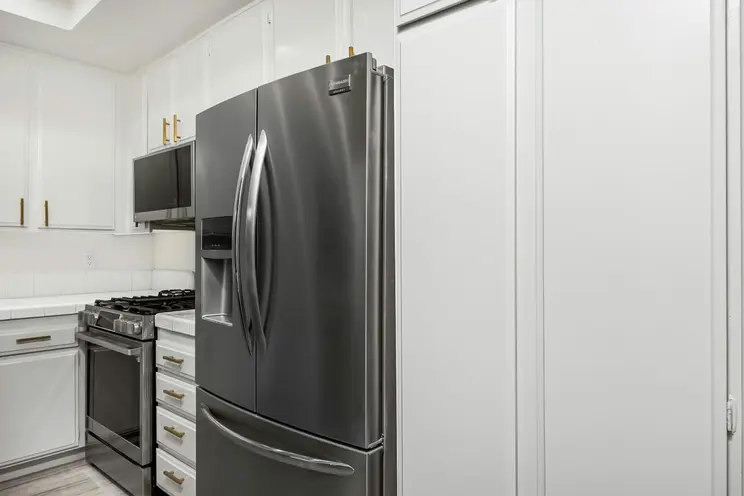
Refrigerator repair in St. John's: a stainless French-door refrigerator with a water and ice dispenser, beside a gas range and white cabinets Refrigerator repair in St. John's: a stainless French-door refrigerator with a water and ice dispenser, beside a gas range and white cabinets

Booking fridge repair in St. John’s

Fridge repairs are scheduled Monday through Saturday, 8:00 am to 7:00 pm. Text the details to (709) 910-9100 or call that number, or send the form on this page.

Say what kind of fridge it is, and send the model number from the label inside, usually on a side wall of the fresh-food section or along the door frame. Until the visit, keep the doors closed, put a thermometer in the fresh-food section, and move the most perishable food to a cooler with ice. If you have a separate chest or upright freezer giving trouble too, it has its own page: freezer repair in St. John’s. The appliance repair page for St. John’s and area covers the other appliances in the house, and the appliance repair cost guide what moves a quote.

Common refrigerator problems

What happens on a fridge visit

The visit starts with the temperatures. The technician reads both sections, listens for the compressor and the fans, and looks at the frost behind the freezer’s back panel if the fresh-food side is warm. A patchy or solid sheet of frost on the evaporator coil points to the defrost system. The heater, its thermostat and the control are then tested with the fridge unplugged. A compressor that clicks without starting sends the test to the start relay first. On a fridge with an ice maker, the water line, the inlet valve and the filter are checked in order, starting at the shut-off valve.

Once the failed part is named, you get the quote and decide, and a part ordered for the model is fitted on a second visit.

Water lines, filters and the ice maker

A fridge with an ice maker or a water dispenser has a small supply line, usually from a valve under the sink or in the basement ceiling below. Most ice and water faults start on that line. A saddle valve clamped onto a copper pipe can clog or drip, and a plastic line kinked behind the fridge slows the flow to a trickle. A filter left in well past its change date cuts the flow too. Change the filter first, then check that the valve is open and the line is not pinched.

If the ice maker has stopped, look at its shut-off arm or switch, which is easy to knock up while reaching for ice. A fill tube frozen solid points to a warm freezer or a leaking inlet valve.

Fog, damp air and the door seal

Fog is a fact of life here: the city is commonly cited as one of the foggiest, windiest and wettest major cities in Canada. Damp air finds every gap in a worn door gasket. Where the seal is torn, flattened or pulled away at a corner, moist kitchen air gets into the cabinet. It shows up as frost on the freezer walls, beads of water along the cabinet edge, and a fridge that runs longer than before.

Keep the gasket clean: wipe it with warm, soapy water and dry it, minding the folds on the hinge side, where crumbs collect and stop the seal closing flat. A door that sags on its hinge opens a gap too. So does a fridge leaning forward, because its doors then hang open a fraction instead of closing under their own weight.

Faults and parts

Why fridges stop keeping food cold, and what to check first

HomeBrill repairs fridges that have gone warm, frosted over, started leaking or stopped making ice, from top-freezer models to French-door and side-by-side fridges.

A refrigerator does not make cold. It moves heat. Refrigerant picks it up at the evaporator coil inside the cabinet and sheds it at the condenser coil outside. Fans push air across both, and a defrost system keeps the evaporator clear. When food goes warm, one of those jobs has stopped, and the symptom usually says which.

A few checks cost nothing. Listen first. The light on but no hum from the compressor points to the compressor, its start parts or the controls. A running fridge with a silent freezer fan points to the fan or the defrost system. Look for food blocking the vents, and make sure the control has not been knocked warmer. Then unplug the fridge, because its fans can start without warning, and look at the condenser coil. Dust or pet hair on it is enough to make a fridge run warm. A fridge is top-heavy, so pulling one out takes two people.

Water under the crisper drawers usually comes from the defrost drain. Meltwater from each defrost runs down a channel at the back of the freezer to a pan underneath, where it evaporates. When ice or crumbs block that channel, the water backs up and runs into the fresh-food section instead. Warm water pushed gently into the drain with a turkey baster often clears it, and ice that comes back points to a defrost fault.

What it is doing, and the usual causes

Fresh-food section warm, freezer still cold
Frost choking the evaporator coil after a defrost heater, thermostat or control fails; a stopped evaporator fan; a stuck damper; food against the vents.
Both sections warm
Condenser coils under a layer of dust, or a condenser fan that has quit. A compressor or its start parts failing, a bad sensor or board, or refrigerant lost through a leak.
Frost or ice in the freezer
A worn or torn door seal, a door left open, a defrost fault, or ice in the defrost drain.
Water on the floor or under the crispers
Ice or debris in the defrost drain, a drip from the ice maker or dispenser line, a cracked filter head or drain pan, or a cabinet tilted forward.
Little or no ice
A closed or kinked supply line, a frozen fill tube, a clogged filter, a failed inlet valve, a warm freezer, or the shut-off arm left up.
Runs all the time
Dirty condenser coils, a leaking gasket, a hot room, a defrost failure or low refrigerant.
Buzzing, clicking or grinding
A fan blade hitting ice, a worn fan motor, or a start relay clicking as the compressor fails to start.
Food freezing in the fresh-food section
A control set too cold, such as a dial at its coldest number or a digital setting below about 2 degrees. Food pressed against the vent where freezer air comes in, a damper stuck open, or a failed thermistor or board.

Parts a refrigerator repair often involves

  • Compressor The pump that moves refrigerant around the sealed system.
  • Start relay and overload Start and protect the compressor on many older fridges.
  • Inverter board Drives the variable-speed compressor of many newer fridges.
  • Condenser coil and fan Shed the heat taken out of the food.
  • Evaporator coil and fan The cold coil behind the freezer panel, and the fan that sends its air to both sections.
  • Defrost heater, thermostat and control Melt frost off the evaporator a few times a day.
  • Air damper Lets freezer air into the fresh-food section.
  • Water inlet valve Feeds the ice maker and the dispenser.
  • Door gaskets The magnetic seals around each door.

Pricing

What refrigerator repair costs

A HomeBrill fridge repair starts at $80, the same as any appliance. The visit opens with the diagnosis, and when the failed part is found, the technician quotes the repair. It starts only once you say yes.

On a fridge, the part decides most of that quote. A worn door gasket is often among the smaller repairs. A fan motor, a defrost heater, a thermistor or a start relay is a routine part, and a main board or an inverter board costs more. Access counts too. A fridge boxed in tight by cabinets, or an ice maker inside a French-door model’s door, takes longer to reach than the back panel of a top-freezer fridge. A part ordered for your model can mean a second visit.

Appliance repair starts at
$80
The repair
Quoted once the technician finds the fault, before the work goes ahead

Brands

Refrigerator brands HomeBrill repairs

We work on refrigerators from Samsung, LG, Whirlpool, GE, Frigidaire, Maytag, Bosch, Amana, KitchenAid, Electrolux, Kenmore, Miele and Danby. Whirlpool Corporation makes the Whirlpool, Maytag, KitchenAid and Amana lines, and Electrolux owns Frigidaire, so fridges with different badges often share fans, defrost parts and controls.

Kenmore fridges are built by other makers, and the digits at the start of the model number say which one. Samsung and LG fridges lean on electronics, with inverter-driven compressors and fault codes. On many Samsung models a code such as 21E or 22E names a fan, in the freezer or the fresh-food section, that the control cannot detect. Check it against the manual for the model, since codes differ between series. Samsung French-door models with the ice maker in the fresh-food door are widely reported to build up ice in that compartment. Danby, a Canadian brand, is known mostly for compact and bar fridges, and Miele for fridges whose parts are made for the model and usually have to be ordered.

  • Samsung
  • LG
  • Whirlpool
  • GE
  • Frigidaire
  • Maytag
  • Bosch
  • Amana
  • KitchenAid
  • Electrolux
  • Kenmore
  • Miele
  • Panasonic
  • Danby
  • Sharp

refrigerator repair

The sealed system: compressor and refrigerant

The compressor, the two coils and the tubing between them form a sealed loop of refrigerant. Most fridge faults sit outside it. Three signs point inside it. Both sections are warm while the fans run and the coil is clean. Frost covers only part of the evaporator. Or an oily stain shows where a tube has worn through. A compressor that clicks and will not start is not always finished, because the start relay beside it fails far more often.

Handling refrigerant is regulated in Canada under federal and provincial halocarbon rules, and only a person with the training those rules require may do it.

Repair or replace a refrigerator

Most fridge repairs are worth doing. Fans, defrost parts, thermistors, start relays, gaskets, hinges and inlet valves are routine parts on almost any model, and they keep a sound cabinet running for years. The harder calls come from the sealed system and the electronics. A failed compressor or a refrigerant leak on an older or inexpensive fridge usually makes a new one the better buy. A main board on a newer fridge sits in between, and the quote set beside the price of a new fridge of the same size decides it.

Look at the cabinet as well. A liner cracked around the shelves, rust along the bottom of the doors or a door that sags even after its hinges are adjusted all mean a tired fridge. If the part has stopped being made for the model, that settles it.

Reviews

The HomeBrill rating on Google

5.0 out of 5.Rated 5.0 on Google

HomeBrill reviews and rating

Fridges across St. John’s and the five areas around it

Fridge repair is booked across St. John’s and the five areas HomeBrill serves around it, and where a fridge stands changes which fault shows first. Housing here ranges from 19th and early 20th century wooden row houses downtown, through post-war suburbs, to recent subdivisions on the city’s west and north edges. An older kitchen may have been planned around a smaller fridge, and a newer one around a counter-depth or French-door model. In an attached house, such as the attached wooden row houses downtown, the fridge may stand in a narrow kitchen. Say so when you book if there is little room to pull it out. The Goulds has larger lots than central St. John’s, with room for a second fridge in a garage or shed. In a cold room like that, the freezer can soften with no failed part at all, as refrigerator repair in the Goulds explains.

FAQ

Fridge questions from St. John’s kitchens

Why is there a sheet of ice on the floor of my freezer?

Meltwater from the defrost cycle could not reach the drain, so it pooled and froze again. The drain at the back of the freezer is usually iced up or blocked with debris. Empty the freezer, unplug it, and clear the drain with warm water poured into it until it runs freely. If the ice comes back within weeks, the drain heater or the defrost system needs a look.

How is a worn fridge door gasket replaced?

On many fridges the new gasket is pushed into a groove that runs around the door. On others it sits under a retaining strip held by screws hidden beneath its lip. It is ordered by model number and often arrives folded, so it is left to relax, or warmed gently with a hair dryer on low. Then it seals all the way around. A door that sags will leak even with a new gasket, so the hinges are checked at the same time.

How cold should my fridge and freezer be?

Food-safety guidance in Canada, Health Canada’s included, is 4 degrees Celsius or colder for the fresh-food section and minus 18 for the freezer. The numbers on a dial are not degrees, so check with a fridge thermometer on a middle shelf and in the freezer. Adjust a step at a time, waiting a day between changes.

How do I tell who built my Kenmore refrigerator?

Look at the model number on the label inside the fridge. The three digits before the dot name the maker: 106 is Whirlpool-built, 795 is LG-built and 253 is Frigidaire-built, among others. Send the whole number when you book, because it tells the technician which parts fit.

Why is the fridge side warm when the freezer still works?

Usually the cold air is not reaching it. In a frost-free fridge the evaporator coil sits behind the freezer’s back panel, and when the defrost system fails, frost builds on it until no air gets through. A stopped evaporator fan or a stuck damper does the same. Thick frost on that panel, or a freezer fan you cannot hear, points that way.

What makes frost build up inside a freezer?

Moist room air getting in: a torn or flattened gasket, or a door that does not swing shut by itself. Shut a sheet of paper in the door at a few points; where it slides out with no drag, the seal has gone. A thick layer on the back wall alone, with sound seals, points to the defrost heater or thermostat instead.

What does it mean when the sealed system has failed?

The sealed system is the closed loop of refrigerant: the compressor, the condenser and evaporator coils, and the tubing between them. It fails when the compressor stops pumping or the tubing leaks refrigerant, and on an older or inexpensive fridge that repair usually makes a new fridge the better buy.

What does Er FF mean on an LG fridge?

On LG refrigerators, Er FF is widely documented as a freezer fan fault. The control no longer detects the fan that moves cold air off the evaporator, often because ice has built up around the blade after a defrost problem. Other Er codes name other parts, Er dH the defrost heater and Er CF the condenser fan among them, so check the code against the manual for your model. Unplugging the fridge for a while may clear the code, but it comes back while the cause remains.

Book refrigerator repair in St. John’s

Call, text or send the form, Mon to Sat, 8:00 am to 7:00 pm.