
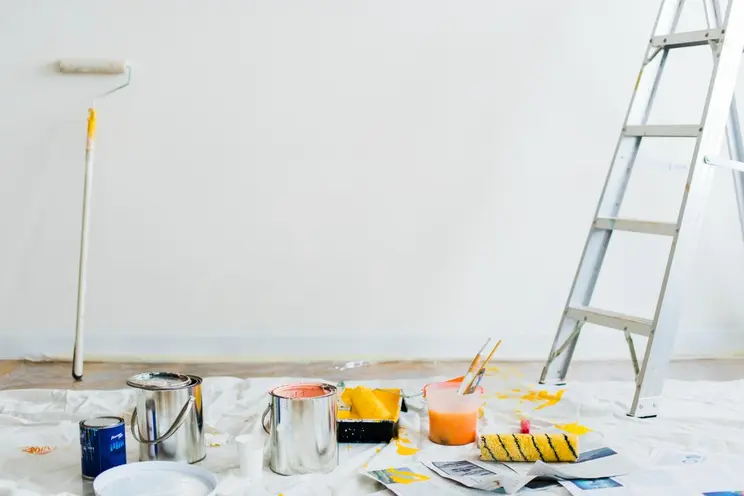
A painting job is mostly preparation. The colour goes on last, and the filling, sanding, cleaning and priming before it decide how the room looks a year later. We take on seven painting jobs, and each has its own page. They are ceiling painting, drywall repair, fence and deck painting, interior painting, plaster and patching, texture repair and trim and baseboard painting.
Three of those are repairs, and they are the painting side of a wall job: making cracks, seams, old patches, damaged plaster and textured surfaces disappear under the finish. Two other HomeBrill services work on walls as well. Small damage alone, such as a nail pop or an anchor hole, is minor drywall patching on the handyman list, which the drywall repair page covers as well. Hanging new drywall is drywall installation with renovations. Inside a renovation, priming the new drywall and painting the new trim is the finishing stage of that project, and it is painting work like the rest of this page.
It is worth a close look at the surfaces first. Note stains, cracks, peeling and any dark spots of mildew, and where they are. For old trim and doors, find out whether the paint is oil-based. Rub a small spot with rubbing alcohol on a cotton swab: if paint comes off it is latex, and if not it is probably oil. Latex over unprimed oil peels, so it changes the preparation. And know roughly when the house was built, because older paint and textures need testing before anyone sands them.
St. John’s houses run from 19th and early 20th century wooden row houses downtown to post-war suburbs and recent subdivisions on the west and north edges. Downtown’s row houses are attached and wooden, many painted in bright colours. Older attached and row houses fill most streets in Georgestown. The older the house, the more likely its walls are plaster and its trim carries old paint.


