
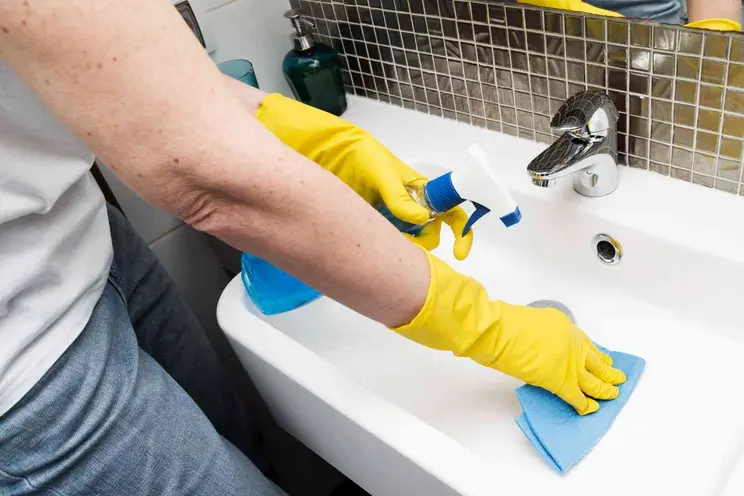
The whole room, not only the fixtures
A weekly clean keeps the parts of a bathroom you use looking right: the sink, the toilet bowl, the mirror and the tub. A deep clean, as the term is generally used, goes on to the parts nobody notices until they are bad. The exhaust fan grille is furred with grey dust, and grime gathers on the floor behind the toilet and the caps over its bolts. The track of a sliding shower door and the front panel of the tub where it meets the floor come next. The inside of the vanity, the light fixture, the top edge of the door and the baseboards come last. Which of these a particular clean takes in is worth agreeing when it is booked.
Soap scum, scale on the taps, mould in the grout lines and the pink film that grows in damp corners each have their own remedy. The list of problems further down this page goes through them in turn. A deep clean works through all of them in the same room, and the handles, taps and switches that hands touch most are disinfected last, once they are clean.
Old bathrooms and new ones
A bathroom fitted a century ago and one fitted last year are made of different things, and what the room is made of decides how it is cleaned.
- Tubs. An older tub is often enamelled cast iron or steel: glass fused to metal, hard but easily scratched by scouring powder and abrasive pads, after which it stains faster. Acrylic and fibreglass tubs and surrounds, usual in newer bathrooms, scratch even more easily. Both want non-scratch cleaners and soft pads.
- Fixtures. Chrome stands up to most bathroom cleaners. Brushed nickel, matte black and gold-tone finishes can be marked by acidic scale removers and abrasive cloths, so check the maker’s care advice before using either.
- Counters and tile. Marble, limestone and travertine lose their polish to vinegar and most scale removers; quartz, porcelain and ceramic tile are unaffected.
- Floors. Vinyl plank, common in newer bathrooms, is damp mopped rather than flooded, since water that works into the seams can lift the planks. Ceramic tile takes a wetter mop, with the grout lines scrubbed.
The fan, the damp and what a deep clean uncovers
St. John’s is commonly cited as one of the wettest and foggiest major cities in Canada. In weather like that, the bathroom fan does more work than most. Lint and dust on its grille cut the airflow, so a fan that once cleared the mirror stops doing it and the room stays damp for longer after each shower. The grille is among the first things a thorough clean reaches, and the questions below explain how it comes down. A fan that still leaves the mirror fogged once its grille is clean may have a blocked duct or a worn motor, which no amount of cleaning will fix.
A thorough clean also turns up things worth knowing about. Caulk that has gone black inside cannot be cleaned, and replacing it is caulking and sealing under the handyman service. A toilet that rocks, a soft spot in the floor beside the tub or a stain on the ceiling below means water is getting where it should not. That is a plumbing question rather than a cleaning one.
Price, photos and booking
HomeBrill’s cleaning starts at $40, and what a bathroom deep clean comes to follows the number of bathrooms, their size and the state of the worst one. A photo of the worst corner sent by text says more than a description. Ask for a quote before the work starts.
To book a bathroom deep clean, text or phone (709) 910-9100 while the cleaning line is open: weekdays and Saturdays, from 8:00 am through to 7:00 pm. The form on this page books one too. A kitchen often needs the same attention at the same time, and kitchen deep cleaning in St. John’s covers it; cleaning services in St. John’s lists the other jobs.

