
Handyman Services hours: Mon to Sat, 8 am to 7 pm

Handyman Services from $50

5.0 out of 5.Rated 5.0 on Google

5.0 out of 5.Rated 5.0 on Google

Handyman services

Minor Carpentry Fixes St. John’s

Minor carpentry fixes and repairs in St. John’s cover the woodwork around a house other than its doors. Trim splits or opens at the corners, stairs creak or wobble, and cabinets, drawers and closet fittings sag or come loose. Handyman jobs like these start at $50 with HomeBrill.

  • Starting at $50
  • Mon to Sat, 8 am to 7 pm
  • Call or text, no account needed

Book minor carpentry fixes

No account needed. HomeBrill calls or texts you back to set a time for the visit.

Handyman services start at $50. When HomeBrill calls or texts you back, ask about the price of your job before a time is set. Privacy: see the privacy policy. This site is protected by reCAPTCHA and the Google Privacy Policy and Terms of Service apply.

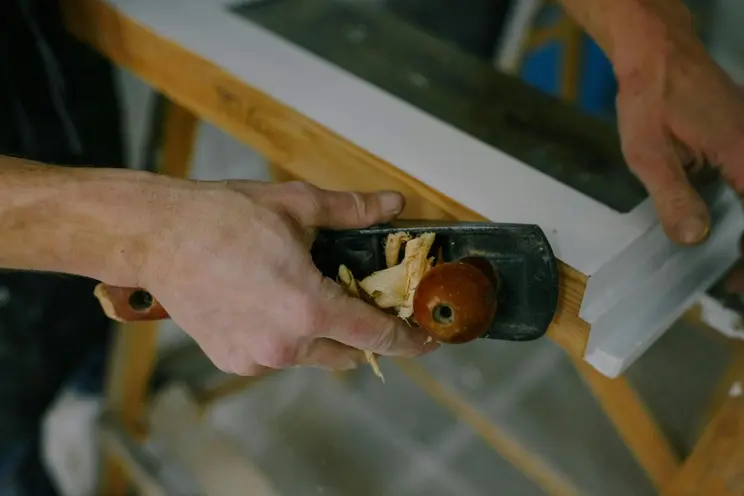
Minor carpentry fixes in St. John's: hands running a block plane along the edge of a white-painted board Minor carpentry fixes in St. John's: hands running a block plane along the edge of a white-painted board

Trim and baseboard in houses of every age

Trim fails differently with the age of the house. Downtown is the historic centre of St. John’s, north of the harbour. Rabbittown is a residential neighbourhood north of downtown. An older St. John’s house, such as one of the wooden row houses downtown, may have wide, thick casings and baseboards under many coats of paint. Their profiles are rarely sold today. Repairs there usually keep the old wood: a split refastened and glued, a dent filled, a short damaged length pieced in from stock milled to match.

Newer houses more often have MDF trim, primed fibreboard that is straight and smooth but does not forgive water, as the questions below explain. Houses of either age share two common faults. Mitred corners on window and door casings open as the wood dries in heated winter air, and a thin gap appears where trim meets a wall that has moved. Glue and a pin nail close an open mitre, and paintable caulk hides a fine line, which caulking and sealing in St. John’s covers along with the outside joints.

Old trim needs one caution before any sanding: paint in a house built before 1960 is likely to contain lead, by Health Canada’s guidance, so test it first.

Stairs: creaks, balusters and the handrail

Stairs move with every step, so their joints are the first to loosen. A creaking tread, a baluster that turns in its hole and a handrail that shifts when someone leans on it are all minor fixes, and the questions below explain each. A newel post that rocks at the foot of the stairs is often bolted into the framing, and tightening it can mean reaching it from below.

Some stair problems are not minor. A cracked stringer, treads that flex or split, or a staircase pulling away from the wall is structural work for interior renovations under home renovations. It may need a permit, so check with your city or town. Replacing a whole railing or guard is more than a fix as well, because a new one has to meet the building code’s heights. It belongs with interior remodelling under renovations.

Cabinets, drawers and closets

Kitchen and bathroom cabinets are mostly particleboard or MDF boxes, strong in daily use but poor at holding a screw that has worked loose.

  • A drawer front that has come away is fixed from inside the drawer box; screws that spin need their holes plugged with glued hardwood dowels and redrilled.
  • A drawer bottom that drops out has slipped from its groove and is reseated, with small glue blocks under it.
  • A drawer that drags or tips is running on worn wooden runners or on metal slides whose screws have loosened.
  • A closet rod that bends in the middle needs a centre support screwed into a stud.
  • A wall cabinet that has started to lean away from the wall was hung on screws that missed the studs; empty it before anything else.

Crooked cabinet doors on concealed hinges are adjusted rather than replaced, as explained further down this page. Doors to rooms and closets have their own page, door repair in St. John’s.

Listing the fixes and pricing them

A carpentry list is priced by what is on it, starting from the $50 at which HomeBrill’s handyman service begins. Tightening, regluing and adjusting are the small end. Making a new length of trim or a replacement stair part to match the old takes longer, and so does work in a stairwell. Painting the repaired trim afterwards is its own job, trim and baseboard painting, under the painting service.

Put each fix on its own line with a photo, and mention the house’s rough age. Text it to (709) 910-9100 or call; handyman calls and texts are taken from 8:00 in the morning to 7:00 in the evening, Monday to Saturday. Ask about the price before a time is set. The handyman services page has the rest of the handyman list.

Problems and materials

Doors, cabinets, railings and trim that have shifted

Minor carpentry fixes deal with the woodwork that shifts, loosens or wears. Doors stick or will not latch, cabinet doors hang crooked, a railing wobbles, a stair squeaks, baseboard comes off the wall and outside trim goes soft. This page explains the usual cause of each, and where a fix stops being minor.

Most minor carpentry problems start with movement rather than breakage. Wood takes on moisture and gives it up again, screws in softwood loosen with use, and a house settles a little over the years.

You can narrow the cause down yourself. Close the door slowly and look at the gap around it. An even gap with a latch that misses points to the strike plate. A gap that closes up toward the top corner on the latch side points to the hinges instead, covered in the questions below. Rub chalk on the door’s edge to see exactly where it touches. On a cabinet, open the door and look at the hinge: a round cup set into the door is a concealed hinge with adjustment screws.

The list below gives the usual cause of each problem, and the questions after it cover four common fixes. The top of this page covers the city’s own houses, and door repair in St. John’s goes further into doors. The nine other handyman jobs each have a page reached from the handyman services page.

Say roughly when the house was built, because the woodwork changes with its age. Housing in the city runs from 19th and early 20th century wooden row houses downtown to post-war suburbs and recent subdivisions on its west and north edges. Georgestown, just uphill from downtown, is one of the older inner neighbourhoods. Its streets are mostly lined with older attached and row houses. Rabbittown, too, is an older area of small, closely spaced houses.

What you notice, and the usual causes

Door sticks in summer, shows a gap in winter
Wood swelling in humid air and shrinking in dry heated air, worst when the door’s top and bottom edges were never sealed.
Latch no longer catches
The strike plate is out of line after the house settled or the hinges sagged.
Door swings open or shut by itself
The hinge side of the frame is out of plumb, often after the house has settled, so the door’s own weight pulls it one way.
Bifold closet door jumps its track
A top pivot or guide that has slipped in the track, or a bottom bracket that has moved.
Drawer sticks, sags or drops off its runners
Slide screws pulled out of particleboard, a bent or worn slide, or a drawer bottom that has slipped out of its groove.
Stair railing wobbles
Brackets loosened in the wall, or a newel post working loose at its base.
Stair or floor squeaks underfoot
Treads or subfloor rubbing on nails or their supports as they flex.

Materials and hardware involved

  • Long hinge screws Long enough to pass the jamb and bite into the framing behind it, which lifts a sagging door.
  • Hinges and hinge pins A bent pin or a worn knuckle lets a door droop.
  • Strike plate The metal plate in the frame that the latch catches; it can be filed or moved.
  • Concealed cabinet hinges Cup-style hinges set into the back of a cabinet door, made to be adjusted in place.
  • Shims Thin tapered wedges that square a jamb or fill a gap behind trim.
  • Epoxy consolidant and wood filler A liquid that hardens soft wood, and a filler that rebuilds it before paint.
  • Trim stock, finishing nails and adhesive Replacement lengths cut to match a profile, held to the framing.
  • Pressure-treated lumber For outside repairs that face the weather or touch the ground.

Pricing

What decides the price of a carpentry fix

HomeBrill’s handyman service has a starting price of $50. From there, a carpentry fix comes to what it involves. Tightening hinges or moving a strike plate is the simple end. A piece of trim or a stair part that has to be matched, cut and fitted is more, and an old profile or hinge size may no longer be sold. Paint or stain to finish the repair, outdoor work that needs a dry day, and the number of fixes count too.

Make a list, one line per fix, with a photo of each, and say roughly when the house was built. Send the list by text to (709) 910-9100, or read it out on a call, and ask for its price before a time is set. HomeBrill takes handyman calls and texts from 8:00 am until 7:00 pm, Monday to Saturday.

Handyman services start at
$50
Your job
Describe it when you call or text, and ask about its price before a time is set

minor carpentry fixes

Where a minor fix ends

Some problems that look like carpentry are structural. A cracked or rotted stair stringer or a floor that dips between joists is structural work rather than a minor fix. So is a door opening that has dropped because the wall above has moved. Ask about it through interior renovations, whose jobs include minor structural and layout improvements. A deck whose frame has sagged or rotted needs a deck contractor. Structural work can need a permit, so check with your city or town.

Railings sit on the same line. Tightening a loose bracket or newel post is a fix. Replacing a railing or guard is a different job, because a new one has to meet the building code’s heights, which your city or town can confirm.

Old paint is the other caution. Test old trim and doors before sanding, scraping or heat-stripping them. Health Canada’s guidance expects lead-based paint in houses older than 1960 and some in those from 1960 to 1990. And damage to the wall beside a door, such as a doorknob hole, is drywall repair, not carpentry.

Doors and floors through the seasons

A door that binds in summer is a seasonal problem first. Sealing all six of its faces slows the swelling, and planing comes last, because a door planed to fit in August can leave a gap in February. Try the hinge screws before any planing, and plane only what is still tight once they are snug. Seal the planed edge right away, because bare wood takes up moisture quickly. On an outside door, seal the bottom edge too: it takes splashback and snowmelt, which is where rot starts.

Floors follow the opposite season. Boards and subfloor shrink in dry winter air, small gaps open around nails, and squeaks that were silent in August start up. Where the underside is open, as in an unfinished basement, a squeak is usually fixed from below with shims or short screws. From above, there are screws made to snap off below the surface of the floor.

St. John’s is commonly cited among the foggiest, windiest and wettest major cities in Canada. Downtown, the housing is largely attached wooden row houses on steep streets climbing from the harbour. Wood in a house like that takes up the damp, so a drawer that sticks in a wet spell may run freely once the heat is on.

FAQ

Trim, stair and cabinet questions

Why does one stair tread creak every time someone steps on it?

The tread is moving against the riser or the stringer beneath it, usually because the glue blocks or nails that held it tight have let go as the wood dried. Where the underside of the stairs is open, new glue blocks or thin shims fixed from below stop it without touching the finish. Otherwise screws are driven from above at an angle into the riser, set below the surface and covered with wood plugs.

Can a loose baluster be fixed without taking the railing apart?

Usually. A baluster that turns or rattles has come unglued where it meets the tread or the underside of the handrail. Fresh glue in the joint and a small finishing nail or screw driven at an angle, where it will not show, hold it again. The rest of the railing stays as it is.

What keeps a stair handrail firmly on the wall?

Brackets screwed into the studs behind the drywall or plaster, with screws long enough to bite well into the wood. A handrail has to hold someone’s full weight when they stumble, and wall anchors in drywall alone work loose under that kind of load. Brackets that missed the studs are moved to where the framing is.

Why is the shelf in my kitchen cabinet bowing in the middle?

Most cabinet shelves are particleboard, which slowly sags under a steady load across a long span, such as dishes or canned food. Turning the shelf over buys time. A cleat along the back edge, a support under the middle, or a thicker shelf cut to fit stops the sag for good.

Is wet MDF trim worth repairing?

Rarely. MDF is made of fine wood fibres pressed with glue, and once water gets into an unpainted edge it swells and stays swollen, so it cannot be sanded flat again. The swollen length is cut out and replaced, after whatever wet it, such as a leaking sink or snow melting at a door, has been dealt with.

What fixes a door that scrapes the frame near the top of the latch side?

Usually the top hinge. Its screws hold only in the thin jamb, and once they loosen the door drops toward the latch. Replacing one or two with screws long enough to reach the stud behind the jamb pulls the door back into line, often with no planing at all.

Can crooked kitchen cabinet doors be lined up again without new hinges?

Usually, if they hang on concealed hinges, the cup-style ones hidden inside the door. Each has screws that move the door up and down, in and out, and side to side, so a row of doors can be brought level. A screw spinning in particleboard needs its hole filled before it will hold.

Can a soft, rotten patch in outside trim be saved?

If it is small and the wood around it is sound, yes. The rot is dug out, the soft fibres hardened with epoxy consolidant, and the hollow filled, then primed and painted. Rot that runs along the board means replacing that length. Either way, find where the water gets in, or the new wood rots too.

Book minor carpentry fixes in St. John’s

Call, text or send the form, Mon to Sat, 8:00 am to 7:00 pm.