
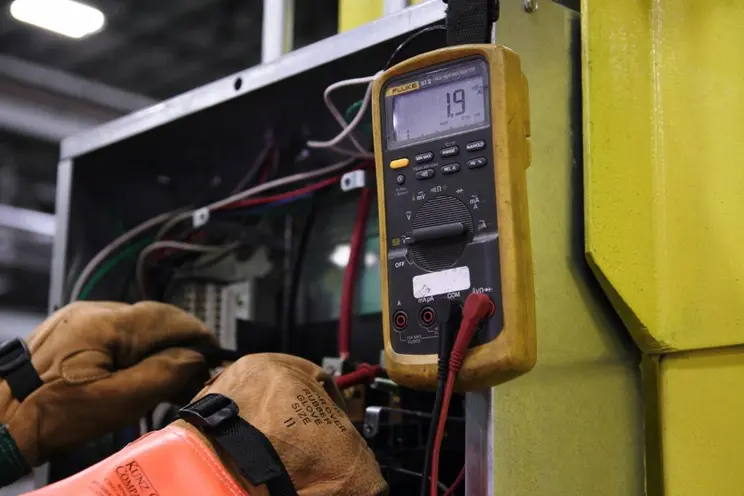
One electrical job on the handyman list
HomeBrill’s handyman service has a single electrical job: swapping a light fixture onto the box that is already there. Light fixture installation in St. John’s explains what that involves and how to choose a fixture for the city’s houses. Everything else on this page, from outlets, switches and dimmers to GFCI outlets, breakers, the panel and any new or changed wiring, is work for a licensed electrician. In Newfoundland and Labrador the province regulates electrical work, issuing the permits and inspecting what is done.
Checks you can make yourself
- A tripped breaker. Open the panel door and look for a breaker sitting off or stuck halfway. Unplug what was running on that circuit, then push the breaker fully off and back on, once. If it trips again straight away, leave it off. Never hold a breaker on, tape it in place or swap it for a larger one.
- A GFCI that needs testing. Press the test button on each GFCI outlet once a month: the power should cut out, and the reset button should bring it back.
- One flickering light. Switch it off, let the bulb cool, and check that it is screwed in snugly; then try a new bulb within the wattage printed on the fixture.
- The panel directory. With a helper and a plug-in lamp, work out which breaker feeds which room and write it on the panel door.
Signs to stop and call an electrician
- a burning smell, scorch marks or melted plastic at an outlet or switch; if there is smoke or fire, get everyone out and call 911;
- a cover plate that feels warm, or a switch that buzzes or crackles;
- sparks or a pop from an outlet when something is plugged in;
- a breaker that trips again after a reset, or a GFCI that will not reset;
- lights that flicker in several rooms at once, or flare brighter when a large appliance starts;
- water anywhere near outlets, a baseboard heater or the panel: stay out of the wet area and call the power utility or 911 rather than touching anything.
Knob-and-tube, aluminum and arc-fault breakers
Houses in St. John’s span 19th and early 20th century wooden row houses downtown, post-war suburbs and recent subdivisions on the west and north edges. The wiring inside the walls differs with that age. The oldest houses may still have some original wiring unless they have been rewired, including knob-and-tube, which has no ground wire, and many older houses have two-prong outlets. Some houses of the late 1960s and 1970s have aluminum branch wiring, which needs devices rated for it. Newer houses have arc-fault breakers on some circuits, which trip on wiring faults an ordinary breaker would miss. Once an electrician has rewired a room or moved a box, the openings cut in the walls are closed and refinished before paint. That is drywall repair or, in an older house, plaster repair.
Heat adds one more point. Many homes in the province are heated by electric baseboards with wall thermostats that run on 240 volts. A thermostat made for a furnace will not work with them, and replacing a baseboard thermostat is electrical work, not a fixture swap.
Booking a fixture swap, or calling an electrician
For the one electrical job on the list, HomeBrill’s handyman service starts at $50. Call or text (709) 910-9100 weekdays and Saturdays, 8:00 am to 7:00 pm, or book through the form. Describe the old light and the new one, and ask for a quote before the work starts. For an outlet, a switch, a breaker or anything in the warning list above, call a licensed electrician instead. A range tripping its breaker as it heats may need stove and oven repair.
Other handyman jobs, from shelf mounting to furniture assembly, are listed on the handyman services page.


