
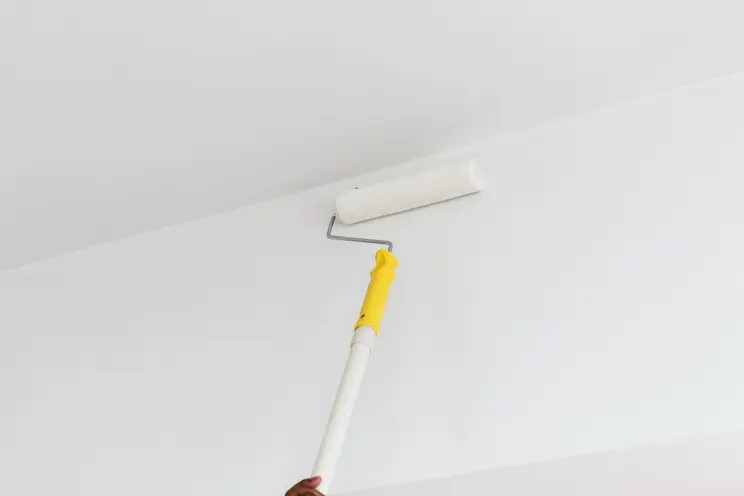
What the ceiling is made of
A ceiling is painted according to what it is, so start there. Look up in daylight, and if in doubt, look at the edge of the hole when a ceiling vent cover comes off.
- Plaster. Hard and dense, often with fine cracks, old patches and many layers of paint. Cracks are bridged and loose areas reattached before the roller comes near it, as on the plaster repair and painting page for St. John’s. The old layers are tested for lead before anyone sands them.
- Sprayed texture. Popcorn or stipple soaks up paint and softens when wet, so it is rolled with a thick-nap roller in light passes, each coat dry before the next. In a house built before about 1990 it may contain asbestos: gentle painting does not disturb intact texture, but scraping, sanding or drilling does, so a lab test comes first. Patches in texture belong to texture repair in St. John’s.
- Smooth drywall. Takes flat ceiling paint easily but shows lap marks. In many houses it is one long surface over an open-plan floor, which has to be painted in one go (the last answer below).
The city’s housing runs from 19th and early 20th century wooden row houses downtown to recent subdivisions on its west and north edges. Georgestown’s streets are mostly older attached and row houses. Rabbittown’s houses are small and closely spaced. Ceilings in the older of these houses are more often plaster on lath than drywall.
Stains and where they come from
A brown ring on a ceiling is water that has come through and dried, and painting it before the source is found only hides it for a while. On a top floor, a stain that shows up after a stretch of wind-driven rain often points to the roof, the flashing or a vent pipe. That is a roofer’s work. Under a bathroom or a kitchen, it more often points to plumbing, and the plumbing service is the place to start.
Once the leak is fixed and the ceiling has dried right through, the stain is sealed with a stain-blocking primer and the whole ceiling painted, not just the spot. The other ceiling problems, from roller marks to peeling over a shower, are listed further down with their causes.
Cold top floors: shadows and cracks
The ceilings of a top floor sit right under the attic, and in a cold, damp winter they are among the coldest surfaces in the house. Two things show it. Grey lines in a grid that follow the framing are ghosting, the first answer below. A crack where ceiling and wall meet that opens each winter and closes by summer is framing on the move, which paint cannot hold. Drywall installation and repair explains the cause and the fix when a ceiling is redone.
Insulation is not painting work. Where it is thin, have it looked at before repainting a ghosted ceiling, or the lines come back.
The city is commonly cited among Canada’s windiest and wettest major cities. Wind and cold work on a top-floor ceiling through the attic above it.
The price of a ceiling
We paint ceilings from $80, and a ceiling’s price builds from its size and from what it needs before the first coat. There may be cracks in plaster to bridge and fill, a stain to seal or a texture to be tested before any repair. A high or sloped ceiling needs staging. Furniture left in the room adds time, and an open-plan ceiling is one large job rather than several small ones. Describe the ceiling and ask what it will cost before settling on a date.
Before you call about a ceiling
Phone or text (709) 910-9100, or use the form at the top of this page; painting calls are picked up from eight in the morning to seven in the evening, every day except Sunday. Say what the ceiling is made of if you know, how high it is, and what marks it, and text a photo taken in daylight. The painting services page covers the other painting jobs, and a bathroom ceiling that keeps peeling is covered under interior painting, bathrooms included.


