
Home Renovations hours: Mon to Sat, 8 am to 7 pm

5.0 out of 5.Rated 5.0 on Google

5.0 out of 5.Rated 5.0 on Google

Home renovations

Drywall Installation in St. John's and Area

New drywall installation for a renovation in St. John's and area: walls and ceilings hung, taped and finished, or a basement closed in. It also covers a ceiling replaced after a leak, and tired plaster covered or stripped back to the studs.

  • Quote after a visit
  • Mon to Sat, 8 am to 7 pm
  • Call or text, no account needed

Book drywall installation and repair

No account needed. HomeBrill calls or texts you back about the project.

There is no starting price: your project is quoted after a visit to see it, and HomeBrill calls or texts you back to arrange that visit. Privacy: see the privacy policy. This site is protected by reCAPTCHA and the Google Privacy Policy and Terms of Service apply.

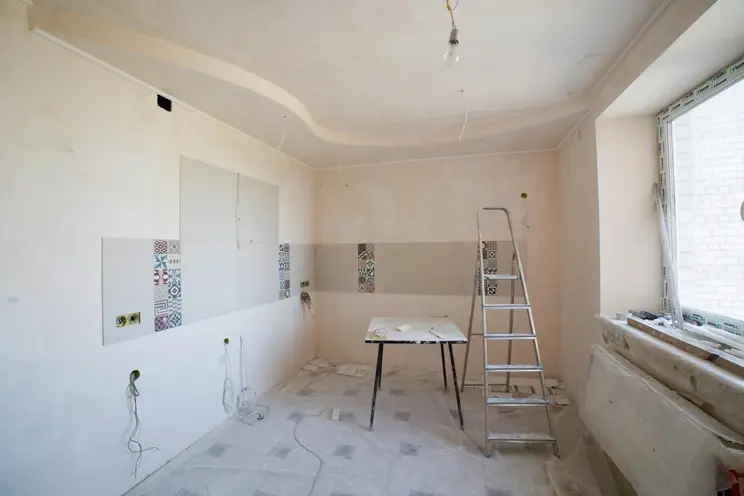
Drywall installation in St. John's: a room with new, unpainted drywall walls and a curved drywall bulkhead across the ceiling, with a stepladder and a work table on a covered floor Drywall installation in St. John's: a room with new, unpainted drywall walls and a curved drywall bulkhead across the ceiling, with a stepladder and a work table on a covered floor

Problems and decisions

New walls, replaced ceilings and where this page stops

Drywall work in a renovation is about whole sheets: a new partition, a basement closed in, a ceiling taken down after a leak. The lists below set out what people notice or have to decide, and the materials that go into the work.

Smaller jobs belong to other pages. A doorknob hole, a nail pop, TV mount anchor holes, and cracks, dents and old patches on a wall about to be repainted go to the painting service's drywall repair. Blending a patch into an orange peel or knockdown wall is texture repair, while plaster sound enough to keep is mended under plaster repair. Drywall installation is one of the twelve jobs on the home renovations page for St. John's and area.

What you notice or decide, and what drives it

Ceiling corners crack open every winter in a top-floor room
Truss uplift: roof trusses arch upward in the heating season and settle back in summer, pulling the ceiling away from the tops of the interior walls. When the ceiling is redone, clips on the wall framing can hold the board near those walls so the corner flexes instead of cracking.
Cracks running up from the corners of doors and windows
Framing that has shrunk or settled, worst where a board joint lines up with the corner of an opening.
Ceiling board sagging between the joists
Water from above, the weight of wet or heavy insulation, board too thin for the joist spacing, or screws set too far apart.
Bare concrete walls in a basement to be finished
Concrete carries cold and damp, so the wall is insulated, framed or strapped and sealed with a vapour barrier before any board goes up.
Old plaster cracked, loose or water-stained across a whole wall
Plaster keys broken away from the lath, or a long-running leak; past a certain size, covering it or replacing it with drywall is more practical than patching.

Materials involved

  • Regular 1/2 inch board The usual sheet for walls; a lighter sag-resistant version is made for ceilings.
  • 5/8 inch Type X board Fire-rated board for walls and ceilings that must act as a fire separation.
  • Moisture-resistant board For bathrooms and laundry rooms away from direct water; not a waterproof backer for a shower.
  • Cement board or foam backer Goes behind tile on tub and shower walls, with a waterproof membrane where the system calls for one.
  • Drywall screws Hold the board to studs and joists, and pull loose less often than nails as the framing dries.
  • Paper and fibreglass mesh tape Paper for flat joints and inside corners; mesh mostly with setting compound.
  • Setting-type compound A powder mixed with water on site, for taping coats and deep fills.
  • Premixed compound Sold ready to use in a pail or box, for the final coats.
  • Corner bead A metal or paper-faced strip that forms a straight, hard outside corner.

Pricing

What drywall installation costs

Renovations have no starting price, drywall included, because the work changes so much from one house to the next; the price comes as a quote after the HomeBrill team has seen the walls. Call or text rough room sizes and a few photos to arrange that visit. The renovation line takes those calls and texts from 8:00 am until 7:00 pm, Monday to Saturday.

The area of board is the starting point, and ceilings take more effort per sheet than walls. High walls and stairwells need a platform or scaffolding. The finish level matters: a garage wall that will be painted flat needs less than a living room wall lit by a big window. Houses in St. John's run from 19th and early 20th century wooden row houses downtown to post-war suburbs and recent subdivisions on the city's west and north edges. The walls behind a job vary as much. So does what has to come out first, whether wet board, old plaster and lath, or insulation that got soaked. And the board waits on other work: insulation and the vapour barrier, the boxes and wiring a licensed electrician puts in, and any plumbing.

Starting price
None: quote after a visit
Your project
Call or text to describe it and arrange the visit; the quote comes after it

drywall installation and repair

Choosing the board and the finish

Regular 1/2 inch board covers most walls. Ceilings take a sag-resistant board, or thicker board where the framing is spaced wide. Fire-rated Type X goes where a code calls for a fire separation. St. John's is commonly cited among the foggiest and wettest major cities in Canada. Bathrooms and laundry rooms take moisture-resistant board. A shower or tub surround, though, needs a true backer behind its tile, such as cement board with a membrane or a foam board system.

How smooth the new board is finished is described in levels from 0 (hung, not taped) to 5 (a skim coat over everything). Name the level you want when you describe the job, since each step up means more coats and more sanding. A wall lit by raking daylight or painted in a sheen needs a higher one.

Before the board goes up

Once a wall is closed, everything inside it is hard to reach, so a renovation settles what goes into it first. The electrician and the plumber finish their rough-ins, and any inspection the permit asks for happens while the studs are open. Insulation and the vapour barrier go in next, and in a basement every sign of water is dealt with before framing starts. Add solid blocking wherever something heavy will hang later: kitchen cabinets, grab bars, a wall-mounted TV, a large mirror.

Older houses need one more step. In a house built before about 1990, some joint compounds, textured finishes and plasters can contain asbestos. Have suspect material tested by a lab before anyone cuts, sands or tears it out; removing it is specialist work. Sanding compound makes a fine dust that irritates the lungs, so close off the room and wear a mask rated for it. For basements and older rooms in the city, see basement finishing in St. John's and interior remodelling in St. John's.

FAQ

Drywall installation questions

Where does a house need fire-rated drywall?

Wherever the building code calls for a fire separation. The usual example in a house is the wall and ceiling between the living space and an attached garage, commonly built with 5/8 inch Type X board. A basement apartment brings separation rules of its own, so check with your city or town.

When should water-damaged drywall be cut out rather than patched?

Once it is soft, crumbling or sagging, shows mould, smells musty or has stayed wet for days, cut it out rather than patch it. Stop the water first, cut back to sound, dry board, and check the insulation and framing behind it before new board goes in. A dry stain on board that is still solid can be sealed with a stain-blocking primer instead.

Should taping start with setting compound or premixed?

Many finishers use setting compound for the taping coat and deep fills, because it hardens by chemical reaction, shrinks less and ends up harder. Premixed compound dries as its water evaporates and is far easier to sand, so it suits the final coats. Setting compound is hard to sand smooth, which is why it rarely goes on last.

How long after hanging can new drywall be painted?

Once every coat of compound is fully dry, sanded and dusted off, and the whole surface has a coat of drywall primer. Thick fills and damp weather slow the drying, so go by the compound's label and by touch. Paint over damp compound can crack or blister.

Book drywall installation and repair in St. John's

Call, text or send the form, Mon to Sat, 8:00 am to 7:00 pm.