
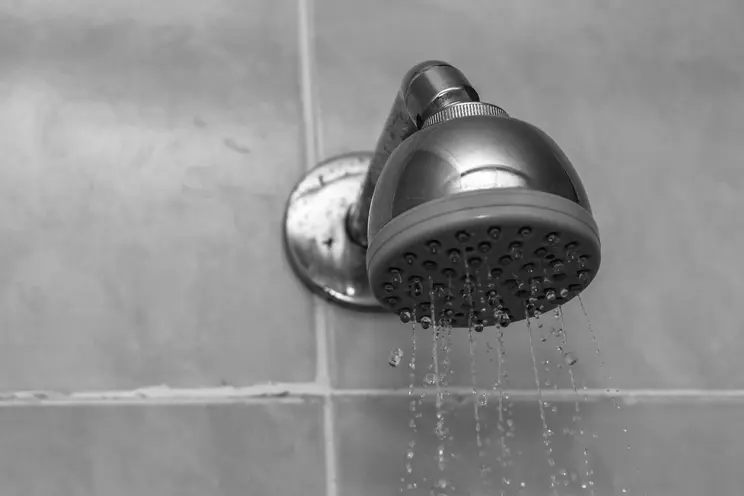
Every age of shower valve
A shower in St. John’s may sit in a downtown wooden row house or a west-end bathroom finished last year. The valve behind it can be just as far apart in age. The housing of St. John’s runs from 19th and early 20th century wooden row houses downtown to the post-war suburbs and the recent subdivisions of its west and north edges. Behind an older bathroom’s two handles there is usually a compression valve: each handle turns a stem that presses a rubber washer onto a brass seat. Where there is a third handle in the middle, it is the diverter for the tub.
Single-handle valves came later and use a cartridge that controls flow and temperature together. Current codes require scald protection in a newly installed shower valve, so valves fitted today are pressure-balancing or thermostatic. A balancing spool reacts when the pressure on one side falls, and a thermostatic valve holds a set temperature. Bathrooms get redone in stages, so the trim says more than the house’s age: two or three handles usually mean compression, one handle a cartridge.
Hot water, scalding and the valve
Commonly published Canadian guidance sets two temperatures that pull against each other. Hot water is stored at about 60 degrees Celsius to keep bacteria such as Legionella down. Water at the tap should be no hotter than about 49 degrees, because hotter water can scald within seconds. The shower valve is where those two are reconciled.
A two-handle valve has no way of reacting: it blends whatever the two pipes deliver. Flush a toilet elsewhere and the cold side sags for a moment, so the shower surges hot. For a small child or anyone slow to step back, that surge is the danger. A pressure-balancing valve trims the hot side as the cold falls, and most single-handle valves also have an adjustable stop beneath the handle that limits its travel toward hot. Changing to a valve with scald protection is a plumbing fixture upgrade.
When an old valve comes out
A new valve means plumbing inside the wall. Where the back of the shower wall faces a closet or a hallway, going in from that side spares the tile. Otherwise the opening is cut through the tile around the valve and covered afterwards with a larger trim plate made for the purpose. Older supply pipe may be galvanized steel, which is joined to copper or PEX with proper transition fittings rather than screwed straight together.
An open wall is also the moment for anything that needs solid backing. Grab bars must be fastened into studs or wood blocking, never drywall anchors, and blocking is easy to add before the wall closes. A new fan, light or heated floor in the same room is a licensed electrician’s work. A valve put back where the old one was is generally treated as a repair. Moving the shower, or adding one where there was none, is an alteration that can need a permit, so check with the City of St. John’s first. A complete new shower is a bathroom renovation in St. John’s.
Price, hours and booking in St. John’s
Shower repair starts at $80. Tell HomeBrill how many handles the shower has, what it is doing and roughly when the bathroom was last redone. Get the job’s price before a time is set.
Bookings for a St. John’s shower are taken Monday through Saturday between 8:00 am and 7:00 pm. Call, or text the valve’s brand and a photo of the trim to (709) 910-9100, or use the form at the top of this page. Leak repair in St. John’s covers a stain that may not be the shower at all. Every other plumbing job, from drains to water pressure, is on the St. John’s plumbing page.
