
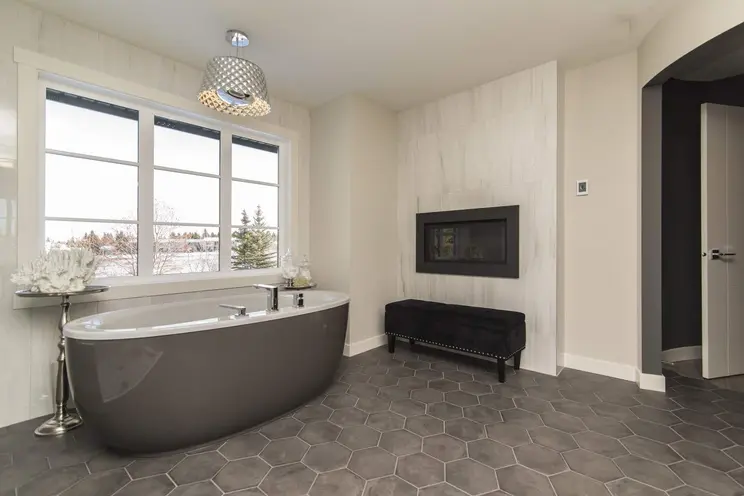
A room fitted in later
Houses in St. John’s run from 19th and early 20th century wooden row houses downtown to post-war suburbs and recent subdivisions on the west and north edges of the city. In an older house the bathroom is often not original. It may have been fitted in later, in a former bedroom, at the end of a hall or in a back addition. Each owner since has added a layer: new tile over old, a vanity on old supply pipe, a fan ducted wherever it would fit. A renovation there starts by finding out what those layers are.
When the bathroom is the only one
Where a house has a single bathroom, and all the more where it sits at the top of a steep, narrow staircase, two things shape the project.
First, the household has to manage without the room for part of the work. Find out early which stages leave the house with no toilet or no shower, and line up family nearby, a gym or a friend’s spare key for those days. If there is an old basement toilet or a laundry sink, make sure it works before the old bathroom comes apart.
Second, everything travels the same stairs. Old tile, plaster and fixtures come down the way the new tub, vanity and backer board go up, so the stairwell and the hall below need covering. Every large item needs measuring against the route before it is ordered.
Behind the plaster and under the floor
Opening the walls and floor of an old bathroom tends to turn up some of these:
- Plaster on wood lath. It is heavy, uneven and no backer for tile in a wet area, so inside the shower it comes out. Sound plaster elsewhere can stay: plaster repair covers repairs before paint, and drywall installation and repair covers new board where an old wall goes.
- Old pipes. Galvanized steel supply lines rust from the inside and narrow, and the drain may be a cast-iron stack with aged joints. Replacing what the open walls expose is work for the plumbing service.
- Old wiring. The oldest houses may still have knob-and-tube wiring. Whatever turns up, and any new circuit for a fan, a heated floor or an outlet, is for a licensed electrician.
- Tired framing. Joists notched long ago for a drain, or a floor sagging toward the tub, are put right before new tile goes down.
Two hazards need a test before anything is broken up. Old trim, doors and window casings are never sanded dry, because by Health Canada’s guidance a house older than 1960 is likely to carry lead-based paint. In houses built before about 1990, vinyl floor tiles, their black adhesive and some plaster and joint compounds may contain asbestos. A lab test of a small sample settles it, and removal is specialist work.
Price, permits and getting in touch
In an old bathroom, what sits behind the plaster decides much of the cost. Call or text with the size of the room, roughly when the house was built and what you want changed. There is no starting price: the room is quoted after a visit to see it, and the call or text arranges that visit. Photos of the ceiling under the bathroom and of the pipes in the basement help.
The City of St. John’s issues building permits inside the city. New or moved plumbing or a change to the structure can need one, so check with the city while the plans are still loose. Renovation calls and texts go to (709) 910-9100, answered from 8:00 am through to 7:00 pm on each day from Monday to Saturday. The booking form at the top of this page works as well.
If the kitchen is next on the list, see kitchen renovations in St. John’s. The other rooms, and the twelve renovation jobs, are on the home renovations page for St. John’s and area.
